


Professionals can sometimes struggle to keep their skills up to date. The intent is there. In practice, though, learning alone at a kitchen table, with no one to talk to about what you’re absorbing, rarely sticks. What sticks is the conversation you overhear about a tool you’ve never used. The designer two desks over, who shows you a faster way to prototype. The founder at the coffee station who casually explains how she structured her first pitch deck.
That kind of learning has a name: people call it informal learning at work, and it’s one of the ways professionals develop new skills. Coworking spaces, in turn, create the exact conditions for it to happen naturally.
Why the skills problem is a context problem
The urgency around professional growth has never been higher. LinkedIn’s 2025 Workplace Learning Report found that 88% of organizations are concerned about employee retention, and providing learning opportunities is their number-one strategy to address it. Meanwhile, 91% of L&D professionals say continuous learning is more important than ever for career success.
But here’s the disconnect. Most of that learning is still delivered through platforms: self-paced courses with modules and certifications. And while they’re useful for structured knowledge, they are less useful for the messy, contextual skills that actually change how you work. Only 15% of employees told LinkedIn that their manager helped them build a career development plan in the past six months. The infrastructure for formal learning exists, but the environment for real learning often doesn’t.
That’s the gap coworking spaces are starting to fill – not by replacing online courses but by creating the setting where learning happens as a byproduct of proximity, diversity, and daily interaction.
The accidental classroom
Can you learn new skills at a coworking space? The short answer is yes, and most of it happens without anyone calling it “learning.”
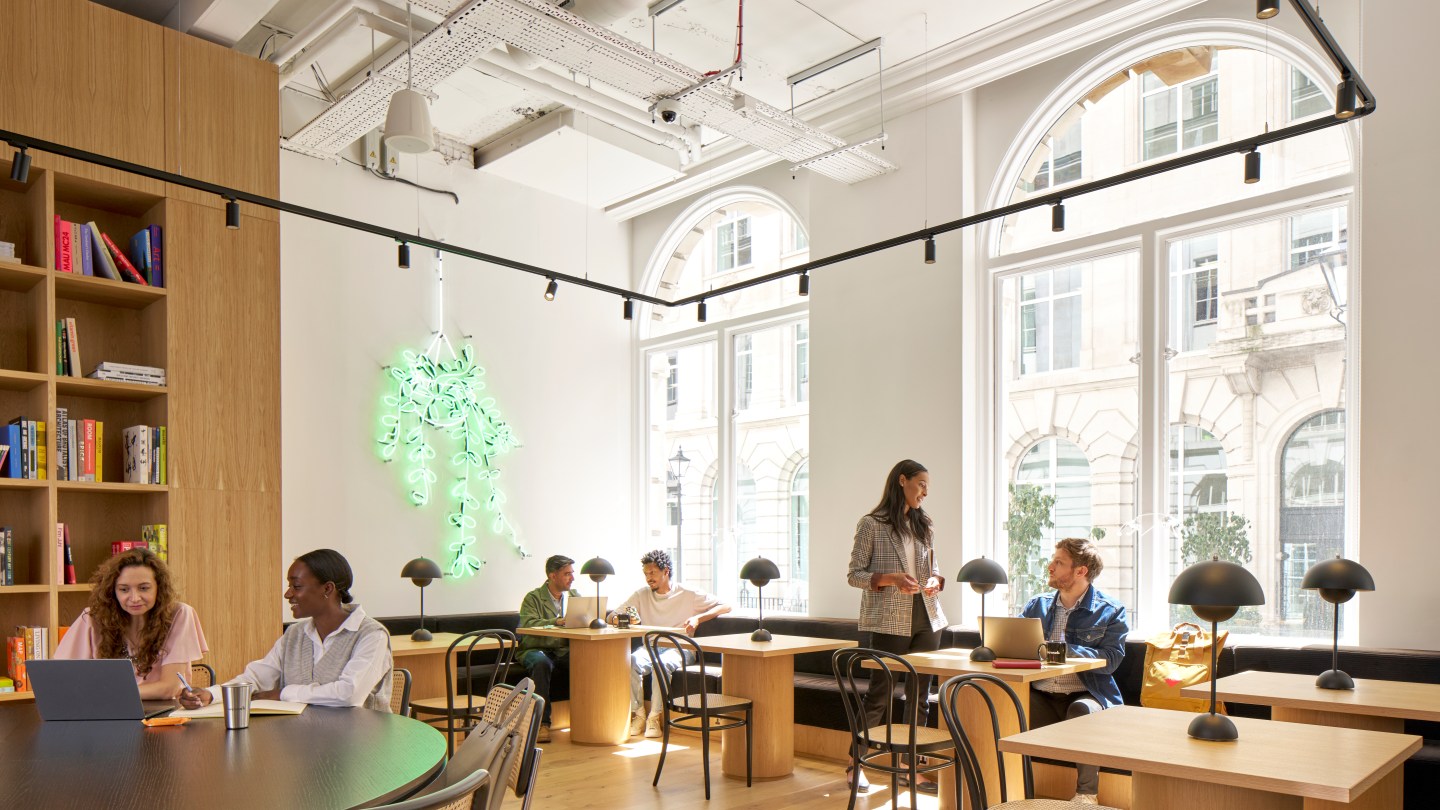
Think about what a coworking space actually puts in the room. A marketer, a software developer, a financial consultant, a product designer, and a small-business owner, all within earshot. Each of them has specialized knowledge the others don’t. When they interact, even casually, knowledge moves. The marketer learns how A/B testing works from the developer. The consultant hears about a client management tool the designer swears by. The founder picks up a negotiation tactic from the consultant’s phone call.
A 2026 study published in Regional Studies surveyed 161 coworking spaces across 74 regions in the UK and found that coworking is measurably associated with skill development across both social-cognitive and technical-digital domains. The learning isn’t limited to individual members picking up tips. It extends to regional skill development patterns, meaning the presence of coworking spaces in an area correlates with broader growth in professional capabilities.
Peer-to-peer learning in shared workspaces works because there’s no hierarchy filtering it. Nobody’s your boss. Nobody’s evaluating you. The knowledge exchange is lateral and spontaneous, while its driving force is curiosity rather than compliance.
Structured learning is growing too
The informal dimension is powerful, but many coworking spaces are also building out intentional programming. Coworking space workshops and events are increasingly common: member-led skill shares, expert-led lunch talks, accelerator tracks, and professional development sessions organized by community teams.
London-based Huckletree, for example, runs structured programs including the Future Founder Academy for aspiring entrepreneurs and The Hundreds Club, a multi-week leadership development program for scale-up leaders. These aren’t one-off events. They’re embedded in the same spaces where members already work, building skills through mentorship, peer learning, and hands-on workshops.
WeWork’s community teams organize events across locations globally, from networking sessions and lunch-and-learns to workshops on topics that range from pitch strategy to personal finance. Members browse and register through the WeWork app, and many events are included in membership.
The combination is what makes coworking professional development different from a traditional training program. You attend a workshop on Thursday, then sit next to someone at your desk on Friday who’s already applying the concept you just learned. The learning and the doing happen in the same place, among the same people.
Why this is happening now
Two forces are pushing coworking and learning closer together.
The first is speed. AI adoption is compressing the shelf life of professional skills. What you learned two years ago may already be partially outdated, and the demand for continuous upskilling in coworking spaces and everywhere else is intensifying. That said, learning is no longer a separate activity from work; it needs to be woven into it.
The second is the shift in where work happens. With millions of professionals working remotely or on hybrid schedules, the old office hallway, where most informal learning used to occur, has disappeared for a large share of the workforce. Coworking spaces are emerging as the replacement for that hallway: a physical place where professionals from different companies and industries cross paths daily, creating the conditions for the kind of serendipitous learning that remote work can’t replicate.
Coworking and lifelong learning are converging because coworking is one of the few remaining environments where diverse professionals share space, routines, and conversations on a daily basis.
What to look for if growth is a priority
Not every coworking space is equally good for learning. If how coworking spaces help with career growth matters to you, here are a few signals to pay attention to when evaluating a space.
- Look for diversity of membership. A space full of people from a single industry will give you less cross-pollination than one with a genuine mix of roles, fields, and experience levels. Check whether the space hosts regular events and, more importantly, whether those events are substantive: skill-focused workshops or cohort programs, not just after-work mixers.
- Pay attention to the community team. A strong community manager does more than keep the coffee stocked. They make introductions and connect members with complementary skills. They create the conditions for relationships that lead to real professional growth.
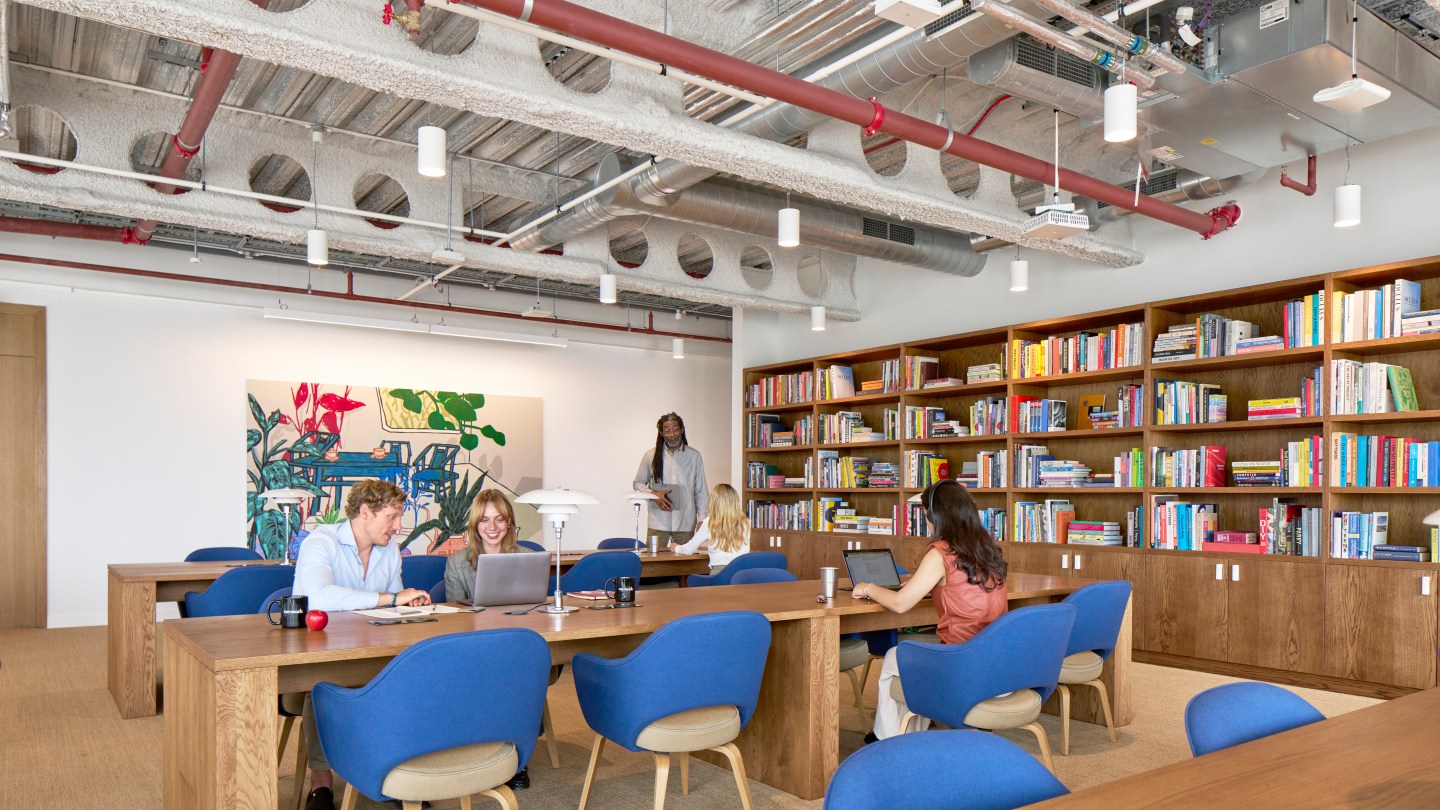
- Look for the physical signals of a learning-friendly environment. Comfortable common areas that encourage lingering. Whiteboards and collaboration zones. Event spaces that get used regularly. The best coworking spaces for professional development are the ones that are designed (physically and culturally) for people to talk to each other.
Your next career breakthrough is less likely to come from a course you finish alone than from a conversation you didn’t plan to have. The right coworking space puts you where those conversations happen every day.
FAQ
Do coworking spaces offer workshops and training?
How does working in a coworking space help you learn new skills?
Can coworking replace formal professional development?


