


It’s 2:15 PM and you’re sitting in the same chair you’ve been in since lunch. Your lower back is doing that thing again. Your brain feels like it’s running on dial-up. The coffee isn’t working anymore, and the phone scroll didn’t help either.
Your body has been filing complaints all afternoon, and you’ve been hitting “dismiss” on every single one because, what can you do?
Here’s the thing. You don’t need a gym. You don’t need a change of clothes. You don’t need 45 minutes and a shower afterward. What you need is your chair, your desk, a few square feet of floor, and about 20 minutes. That’s a desk workout: a structured bodyweight circuit designed for the exact conditions you’re already sitting in.
This isn’t a vague suggestion to “move more,” but an actual routine. Let’s get into it.
Why your chair is working against you
You already know sitting all day isn’t ideal, but the research is more striking than most people realize. A 2024 study published in JAMA Network Open followed more than 480,000 people for nearly 13 years and found that those who mostly sit at work had a 16% higher risk of long-term health complications, including a 34% higher risk of cardiovascular issues, compared to people who move more during the day. And here’s the catch: hitting the gym after work doesn’t fully make up for it.
What does help is breaking up the sitting itself. Research from Columbia University found that five minutes of walking every 30 minutes reduced post-meal blood sugar spikes by 58% and lowered blood pressure. Five minutes. Not an hour. Not even ten.
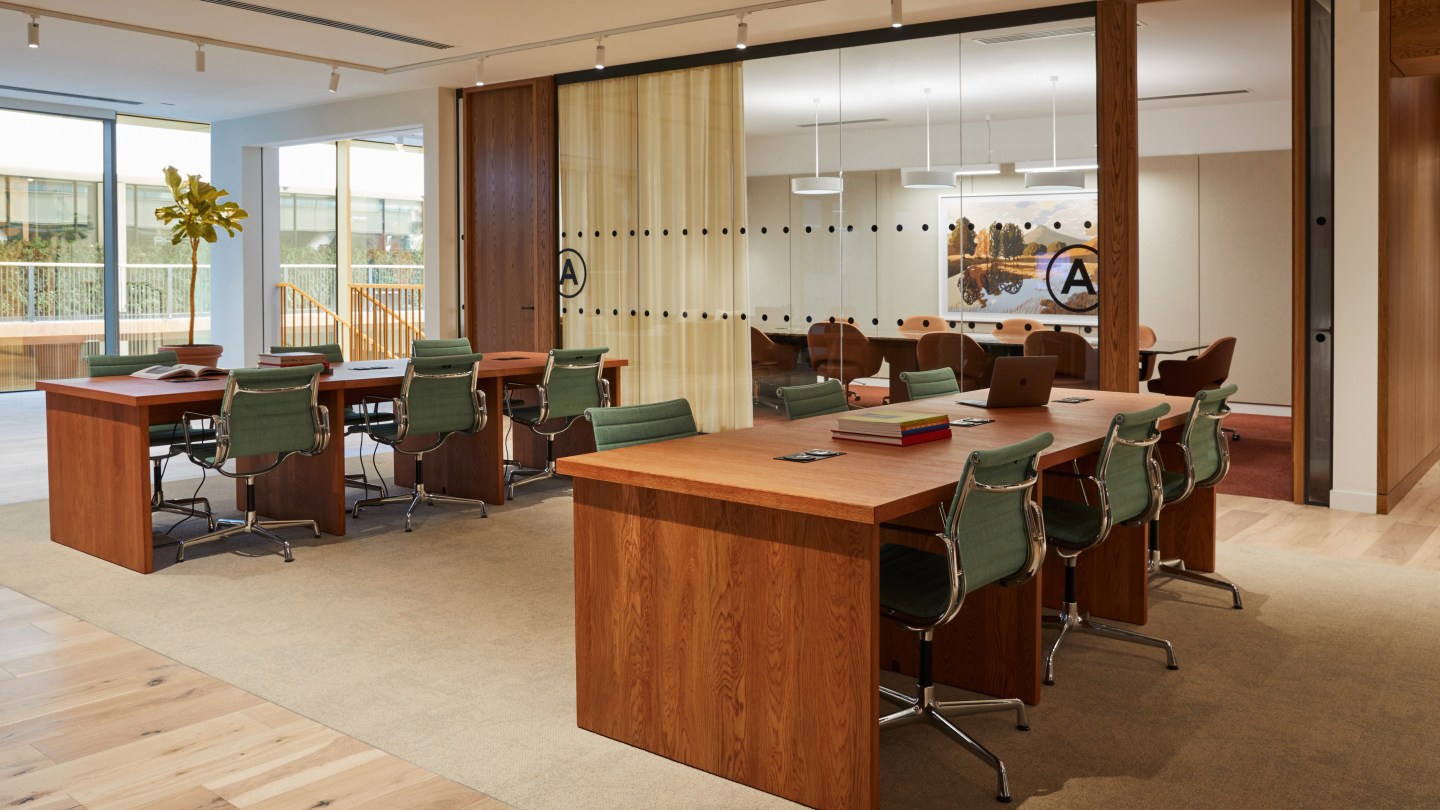
So the answer is moving more often, and a quick workout at your desk is one of the most realistic ways to make that happen between meetings, messages, and everything else that is competing for your attention.
The routine, move by move
This 20-minute bodyweight workout has three blocks: a warm-up, a circuit, and a cooldown. No equipment. No floor work. No awkward wardrobe decisions.
- Warm-up (3 minutes)
Stand up. That’s step one (and honestly, the hardest part some days). Roll your shoulders backward ten times, then forward ten times. Do slow neck circles in each direction. Follow that with 20 marches in place, lifting your knees to hip height. Finish with arm circles: ten small, ten large, each direction. By the end of this, you should feel looser and slightly more human.
- Circuit (14 minutes, repeat twice)
Work through each of these exercises you can do at your desk, resting 15 to 20 seconds between moves. After one full round, take a 60-second breather. Then go again.
- Chair squats (45 seconds): Stand in front of your chair, feet hip-width apart. Lower yourself until you barely touch the seat, then stand back up. Weight in the heels, chest lifted. If your chair rolls (and it will try), push it against a wall first.
- Desk push-ups (45 seconds): Hands on the edge of your desk, shoulder-width apart. Walk your feet back until your body forms a straight line. Lower your chest toward the desk and push back up. The farther back your feet, the harder this gets. Find the distance that makes you work for it.
- Standing calf raises (45 seconds): Rise onto your toes, hold for a beat at the top, lower slowly. Rest your fingertips on the desk for balance. These are subtle enough to do on a video call with your camera on.
- Seated leg extensions (45 seconds): Sit tall. Extend one leg straight out, hold for two seconds, lower it without letting your foot touch the floor. Alternate legs. Your quads will have opinions about this one, and they won’t be polite.
- Wall sit (45 seconds): Find a wall. Slide your back down until your thighs are parallel to the floor. Hold. Breathe. This is the kind of exercise that looks like nothing and feels like everything. If it’s quietly brutal, you know it works.
- Desk tricep dips (45 seconds): Grip the edge of your desk (make sure it’s stable), walk your feet out, and lower yourself by bending your elbows to 90 degrees. Push back up. Keep your back close to the desk throughout. These are deceptively hard, which is part of the appeal.
- Cooldown (3 minutes)
Stand up and do a forward fold, arms hanging toward the floor. Hold for 20 seconds. Follow with a standing quad stretch on each leg — grab your ankle behind you, 20 seconds per side. Finish with a seated spinal twist: sit tall, cross one leg over the other, rotate your torso gently in the opposite direction. Twenty seconds each side.
And you’re done. Twenty minutes, no sweat-soaked shirt, and no excuse to skip the rest of the afternoon.
The part nobody mentions
Most people searching for desk exercises with no equipment are trying to fix their back or loosen their shoulders. Fair enough. But the sharper payoff might be what happens above the neck.
And breaks work wonders here. Even micro-breaks during the workday help preserve energy levels and reduce fatigue. So that post-lunch fog you’ve been powering through with a second (or third) espresso? A 20-minute circuit might clear it faster.
When your body benefits, your brain benefits more, which makes this one of the few things in a workday that genuinely earns the word “productive.”
Can you get away with this in an open office?
Short answer: most of it, yes. Calf raises, seated leg extensions, shoulder rolls — practically invisible. You could do them on a video call and nobody would blink. Chair squats and desk push-ups are a bit more conspicuous (you will get looks), so save those for a quieter moment (or a break room, phone booth, or wellness room if your office has one; if it doesn’t, you might need a new one).
The real question behind how to exercise at work without equipment isn’t whether you have the right setup, but whether you’re willing to use the furniture you’ve already got. The desk is a push-up bar. The chair is a squat rack. The wall is a leg press. You’ve been sitting in a gym this whole time.

How to make it stick
The routine takes 20 minutes. Doing it once is easy, but doing it again tomorrow? Now that’s the actual challenge.
Block it on your calendar. A recurring 2 PM slot works well, right when most people’s energy dips hardest (right around when your lower back starts hurting again). Treat it like a meeting you can’t reschedule, because in a way, it is. Your body’s been requesting this one all week.
If 20 minutes feels like too much at first, start smaller. The warm-up and two or three circuit moves take 10 minutes, and it’s good enough. Consistency beats intensity every time, meaning, 10 minutes daily will always outperform 40 minutes once a week.
Pro tip: it helps to have a co-conspirator, so loop in a fellow back-hurting coworker. It’s a lot harder to talk yourself out of wall sits when someone’s already standing by your desk, ready to go.


