



You’ve probably worked somewhere with an Instagram-worthy lounge. Or a rooftop. Maybe both. And you’ve probably also noticed that neither one helped you finish a proposal on a tight deadline or prepare for a presentation.
We get it. There’s a growing gap between amenities that look good in a job listing and amenities that improve work in any measurable way. The difference matters if you’re making real decisions about where your team spends its days.
The good news: once you know what to look for, the useful stuff is easy to spot.
What counts as a workplace amenity?
A workplace amenity is anything beyond your desk and laptop that supports how you work. That includes physical spaces like conference rooms and phone booths, services like front desk support and mail handling, environmental details like natural light and reliable Wi-Fi, and well-being features like wellness rooms and outdoor terraces.
Some amenities improve focus. Some improve collaboration. Some improve how you feel at 3 p.m. on a Wednesday. The best workplaces layer several of these together so the space adapts to you, rather than the other way around.
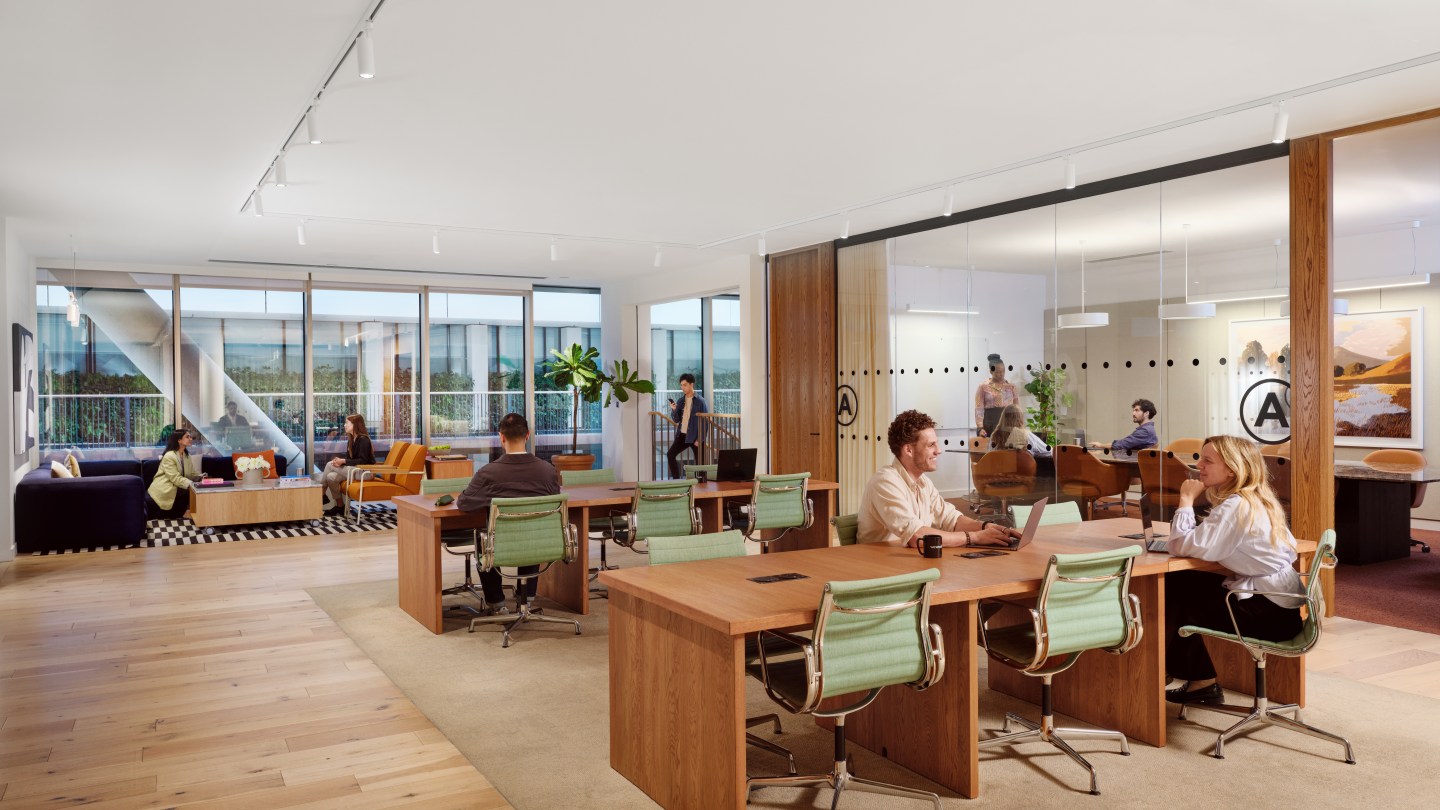
Quiet when you need it
You’re two hours into something that requires real concentration. A financial model, a strategy doc, a piece of code that’s finally starting to make sense. Then someone stops by your desk to ask about lunch plans, and just like that, you’re starting over.
This is where spaces designed for concentration earn their keep. Phone booths for quick calls. Small reservable rooms for heads-down work. Across WeWork’s 600+ locations worldwide, phone booths sit steps from the common areas, so taking a call doesn’t mean hunting for an empty hallway. Wellness rooms are another option when you just need ten minutes of quiet to reset.
Meetings that don’t waste the first ten minutes
You know the routine. Someone can’t connect to the screen. The room is double-booked. The whiteboard markers are all dry. By the time you start, half the room has mentally checked out.
A well-equipped conference room solves problems you didn’t realize you were tolerating. Reliable AV so screen-sharing works the first time. App-based booking with capacity and tech specs listed upfront. In WeWork buildings, the setup is consistent across locations, which is especially helpful if your team moves between spaces. You walk in knowing what to expect.
The invisible stuff that matters most
Nobody puts “functioning Wi-Fi” on a highlight reel. But when your video call freezes during a client pitch, you remember how much it matters.

The least glamorous workplace amenities are often the most important. Reliable internet. Secure building access. AC that doesn’t make you reach for a sweater in August. Clean, well-maintained spaces. These are things you only think about when they fail. At WeWork, community teams manage this layer quietly, handling everything from tech issues and supply restocking to security and building comfort, so you don’t have to.
If you go an entire day without thinking about the building, the amenities are doing their job.
Well-being woven into the floor plan
For a new parent who needs a mother’s room, or someone managing a chronic condition who needs ten quiet minutes between meetings, a wellness room isn’t a luxury. It’s the difference between a manageable day and one that feels impossible.
The same goes for outdoor terraces where you can take a walking call and breathe, and ergonomic chairs that don’t punish you for sitting through a long afternoon. These amenities improve work by keeping your body and mind in better shape across the full day, not just the first few hours.
The World Health Organization estimates that depression and anxiety cost the global economy roughly $1 trillion per year in lost productivity. You don’t need a meditation pod to address that, but giving people access to fresh air, natural light, and a quiet place to recharge is a solid start.
The stuff that makes the day easier
Some amenities don’t boost productivity in any dramatic way. They just remove the small annoyances that pile up over a week:
- On-site parking so your commute doesn’t start with a 15-minute hunt for a spot
- Mail and package handling so you’re not rerouting deliveries to your apartment
- Quality coffee and stocked micro-kitchens so 2 p.m. doesn’t require a trip to the corner shop
- Event spaces and lounges for team lunches or a change of scenery
Individually, none of these feel like a big deal. Together, they change how the day feels. At WeWork, these are bundled into the environment, so you’re not sourcing them yourself. The kitchen is stocked. The coffee is good enough that you stop buying one on the way in. The front desk handles your packages. You just work.
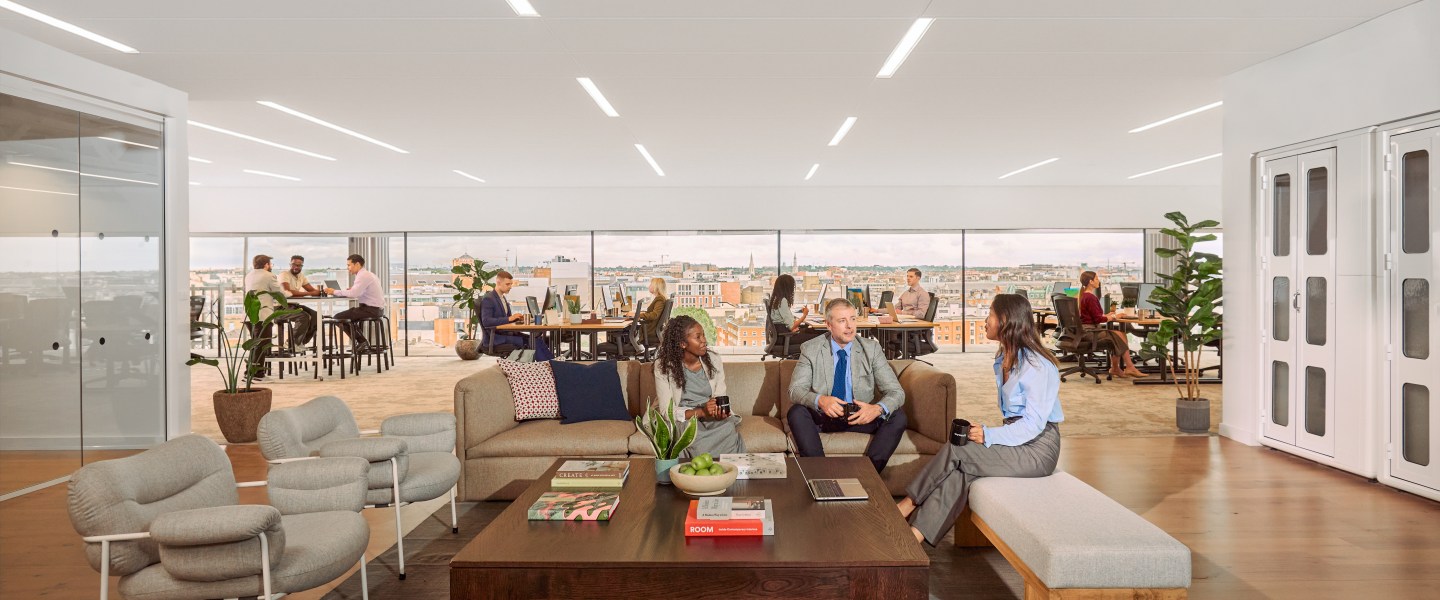
How to figure out which amenities your team needs
Start with observation, not assumptions. Where do people lose time? Are they hunting for rooms, waiting on tech, or leaving the building for a quiet call?
WeWork Workplace can help here, tracking how spaces are actually used so you’re working from data, not guesswork. A short survey helps, too: What slows you down most? What would make tomorrow easier? The answers tend to cluster around a few recurring themes, and those themes are your priority list.
From there, a simple framework helps:
- Fix the friction first. Make sure the conference room AV works, and there’s a place to take a private call before investing in a game room.
- Pilot small. Testing a new environment doesn’t have to mean signing a lease. WeWork On Demand works like a day pass, letting a few team members try a different setup for a day so you can learn what works before committing to anything long-term.
- Review quarterly. Your team’s needs will change, and your space should change with them. This is where flexible workspace earns its place in a real estate portfolio: you adjust your footprint as the work evolves, not when a lease allows it.
The business case, briefly
Every hour your team spends troubleshooting a screen that won’t connect or hunting for a quiet room is an hour not spent on actual work. Amenities that improve productivity don’t need a complicated ROI calculation. They reduce frustration and keep your best people focused on what they were hired to do.
There’s also the real estate angle. Instead of building out your own space with all these amenities from scratch, a flexible workspace like WeWork bundles them into a single environment. You get the conference rooms, phone booths, mother’s rooms, community team, and coffee without sourcing and managing each one yourself.
Smart workplace amenities pay for themselves in recovered time, lower turnover, and a workspace that works for the people in it.
If you’re rethinking your team’s setup, a good first step is simply trying a different environment. Book a day at a WeWork with a day pass, tour a location near you, or explore WeWork All Access to see how a flexible membership fits your workflow. Sometimes the best way to evaluate workplace amenities is to experience them firsthand.
FAQ
What features does WeWork offer?


