


It usually starts with a number that doesn’t add up.
You’re paying for a full floor, but half the desks sit empty most days. Or you’ve just hired three people in a city where you don’t have an office, and they’re working from kitchen tables and noisy coffee shops. Maybe your lease is up in six months and the thought of another five-year commitment makes your stomach turn.
These are the moments that push companies to rethink where and how their teams work. And increasingly, the answer is flexible office space.
First, a quick definition
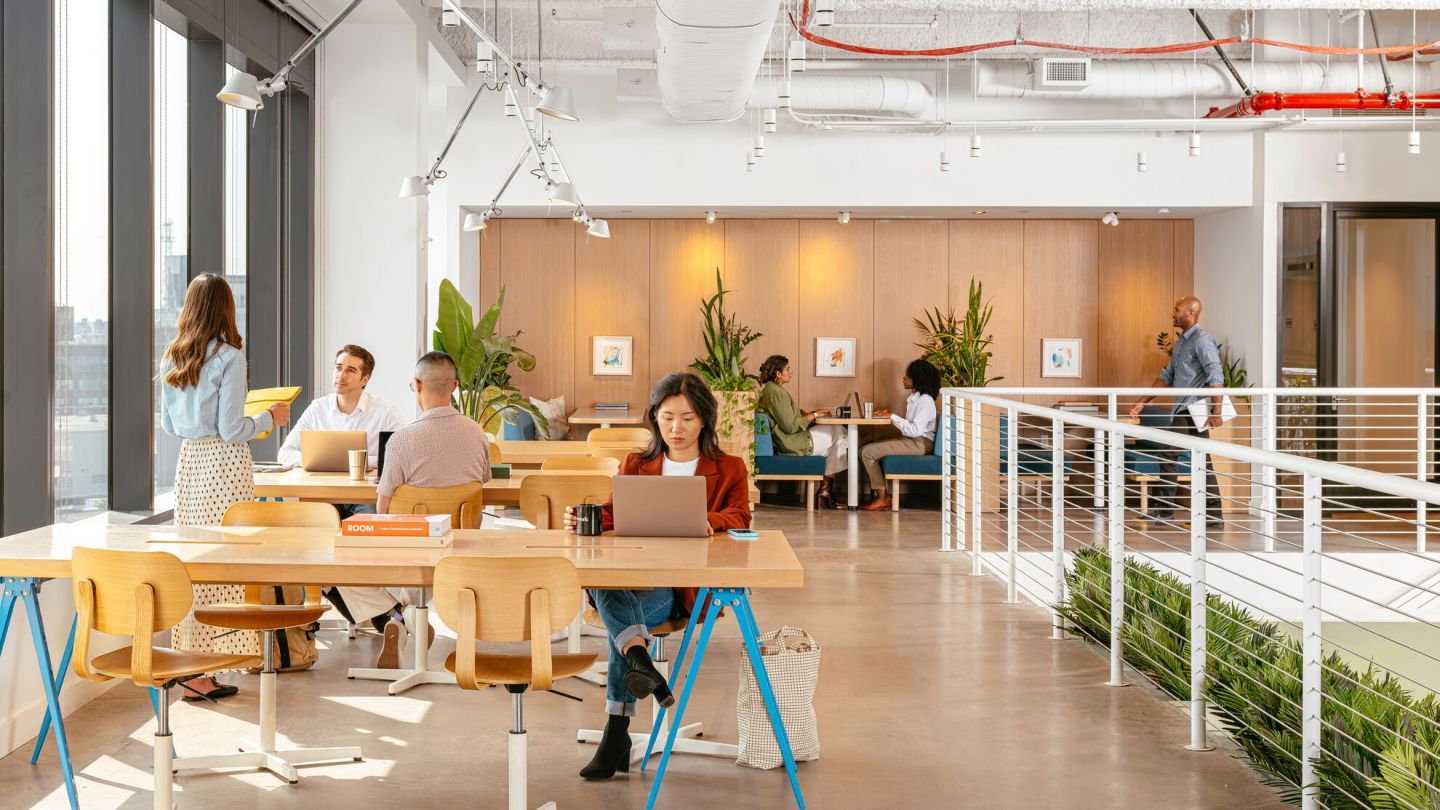
Flexible office space is any workspace you can use without a long-term lease. You control how much space you need, where it is, and how long you commit. That could be a private office on a month-to-month basis, a hot desk you book for the day through WeWork On Demand, or a membership like WeWork All Access that unlocks hundreds of locations worldwide.
The key difference from a traditional lease? Most arrangements let you scale up or down without the penalties that come with a traditional lease.
Five reasons companies are making the move
1. The math works differently
Traditional leases bundle in costs that aren’t obvious upfront. The buildout — walls, wiring, furniture — can run into the hundreds of thousands. Then there’s maintenance, utilities, and the reality that if your headcount drops, you’re still paying for every square foot.
Flexible workspace rolls most of that into a single monthly fee. And when your team grows from 15 to 30 or scales back after a project wraps, you adjust accordingly.
Hybrid work isn’t going anywhere, either. A JLL survey found that 72% of the global workforce views return-to-office policies positively — but acceptance depends heavily on the quality of the office experience, not just the policy itself. Flexible space is what makes that balance financially workable.
You’re not necessarily paying less. You’re paying for what you actually use.
2. It gives hybrid teams a real home base
Here’s the thing about hybrid work: a policy alone doesn’t make it work. Your team in Denver needs more than a Zoom link. Your new hire in Austin needs more than a laptop on a couch.
Flexible workspace fills that gap. Instead of one headquarters that works for some and leaves others out, you give your whole team access to professional space wherever they are. Someone traveling for the week can book a desk through WeWork On Demand — same Wi-Fi, same coffee, same conference rooms. No guest passes, no makeshift setups.
When your team does come together for a planning day, a bookable meeting room makes the time more intentional. A hybrid policy is only as strong as the infrastructure behind it.
3. Your space can flex as fast as your business
You land a new client and need five more desks next month. A department restructures and you’ve got empty offices. You want to test a new city before committing long-term.
In a traditional setup, every one of those changes is a headache. With a flexible workspace, it’s a phone call. That agility is one of the top reasons companies move to flexible office space — and for those in fast-moving industries, it’s becoming a requirement.
When your real estate moves as fast as your business, you stop planning around the space and start planning around the work.

4. Flexibility attracts talent
Let’s face it: where and how people work matters to them. Offering flexible workspace signals trust and autonomy. That resonates, especially with experienced professionals who expect a say in their work environment.
It’s also a practical edge when hiring across markets. You can say yes to a great candidate in Miami or Chicago without opening a satellite office. A WeWork All Access membership gives them a professional workspace from day one: private phone booths, comfortable lounges, even wellness rooms when they need a breather.
And there you have it: flexibility as a competitive advantage, not just a perk.
5. The space can match the work
Not every hour looks the same. A strategy session needs a whiteboard and energy. A quarterly report needs quiet. A client pitch needs a polished room.
Traditional offices offer one setting for every scenario. Flexible workspaces are built around variety: quiet nooks, open lounges, private offices, bookable rooms. Your designer grabs a quiet corner for deep work in the morning, then joins the team in an open area after lunch. That alignment between space and task sounds small, but it adds up.
It’s not all upside
No model is perfect.
Culture is the most common concern. If your team isn’t together every day, will you lose the glue? It’s a fair worry, but company culture comes from rituals, communication, and leadership, not proximity. Teams that come together with intention, even a few times a month, often build stronger bonds than those sharing an elevator by default.
Privacy comes up, too. Most flexible spaces offer private offices, dedicated networks, and enterprise-grade options for companies with stricter needs. Worth asking about, but the answers are usually there.
Etiquette takes some adjusting. Keeping calls out of quiet zones, cleaning up shared kitchens, being mindful of noise. Most coworking spaces set clear norms from day one, and the learning curve is short.
How do you know it’s working?
Track more than cost per seat. A few things worth watching:
- Space utilization. If it’s consistently below 60%, you’re paying for more than you need.
- Employee satisfaction. A short quarterly survey tells you whether people feel supported in how and where they work.
- Hiring and retention. Are you reaching candidates you couldn’t before? Are people staying longer?
- Speed. When something changes, how fast can you respond?
The companies doing this well treat workspace as a living strategy, not a one-time decision.
Ready to explore?
You don’t have to overhaul everything at once. Many companies start small: giving remote employees access to shared space or testing one city before expanding. If you’re curious what that looks like, WeWork’s workspace solutions are a good place to begin.