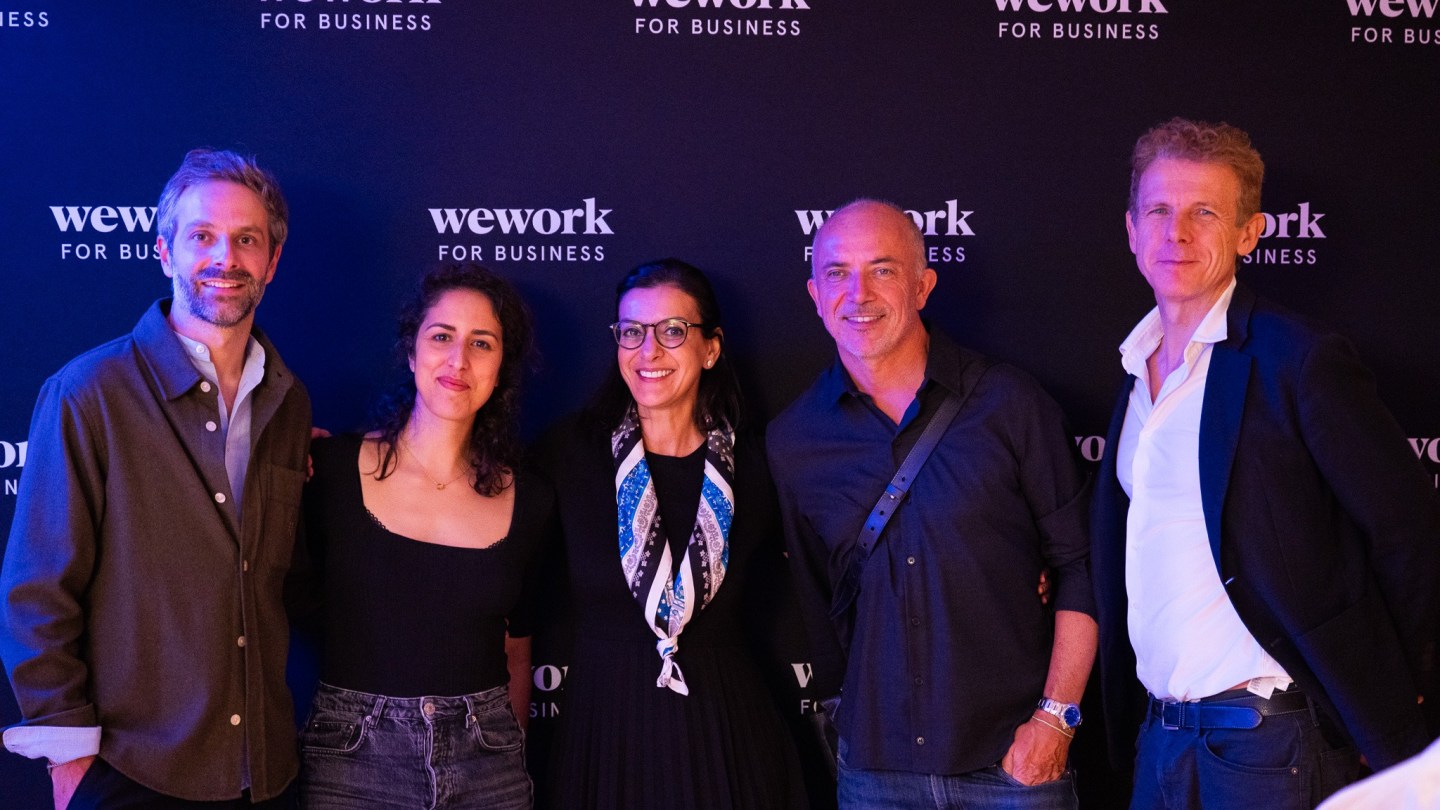
The way companies work, grow, and make decisions is changing faster than ever. Our WeWork for Business event series brings business leaders and industry experts together in New York, Paris, and Mexico City to talk about what that change means in practice.
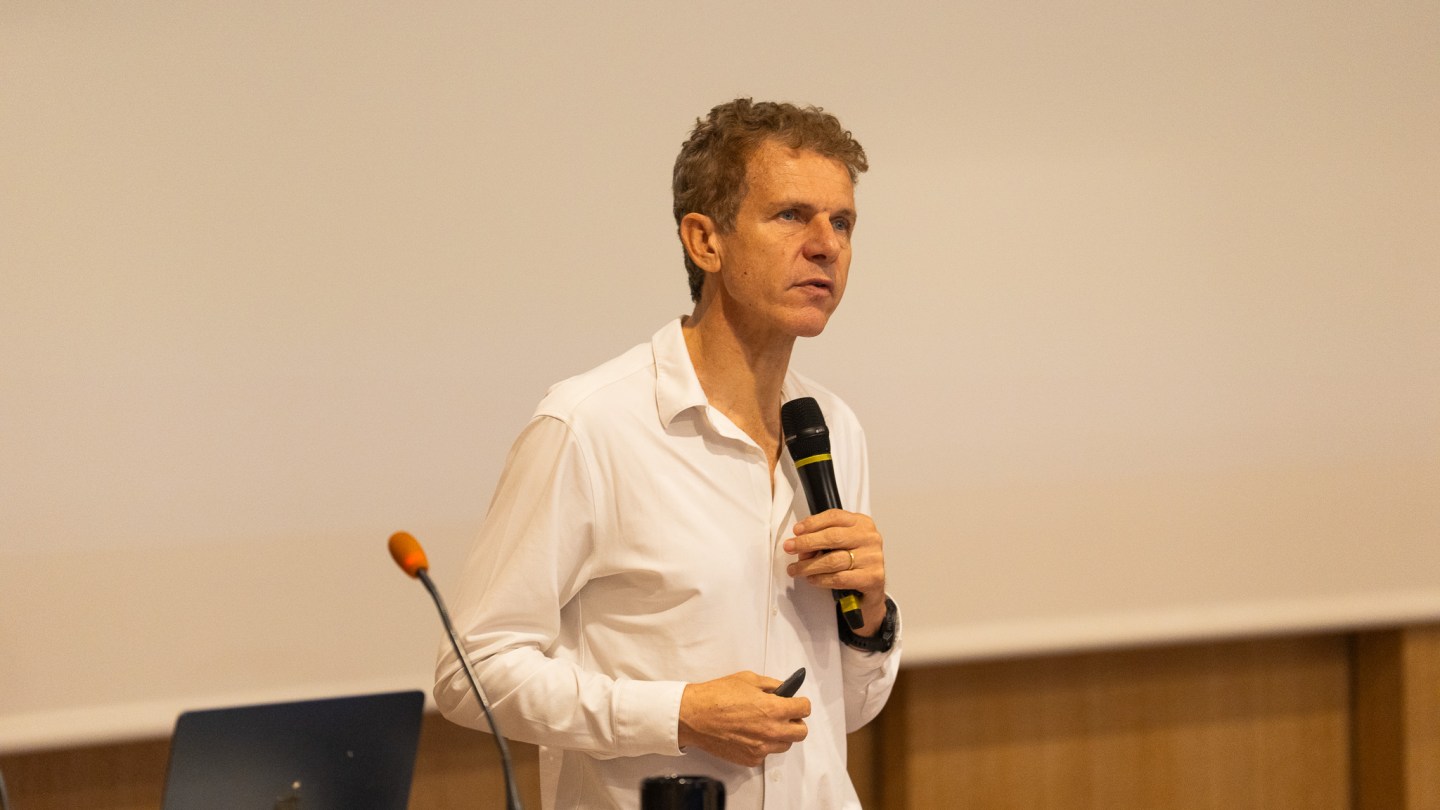
On September 29, the series came to WeWork 33 Rue la Fayette in Paris for AI: What’s Really Changing for Businesses. Keynote speaker Gilles Babinet, entrepreneur and president of Café IA, opened with an important question: why are companies investing so heavily in AI without seeing widespread productivity gains? Most organizations still run on principles inherited from the Industrial Revolution, and simply adding AI to existing ways of working won’t, by itself, make people more productive.
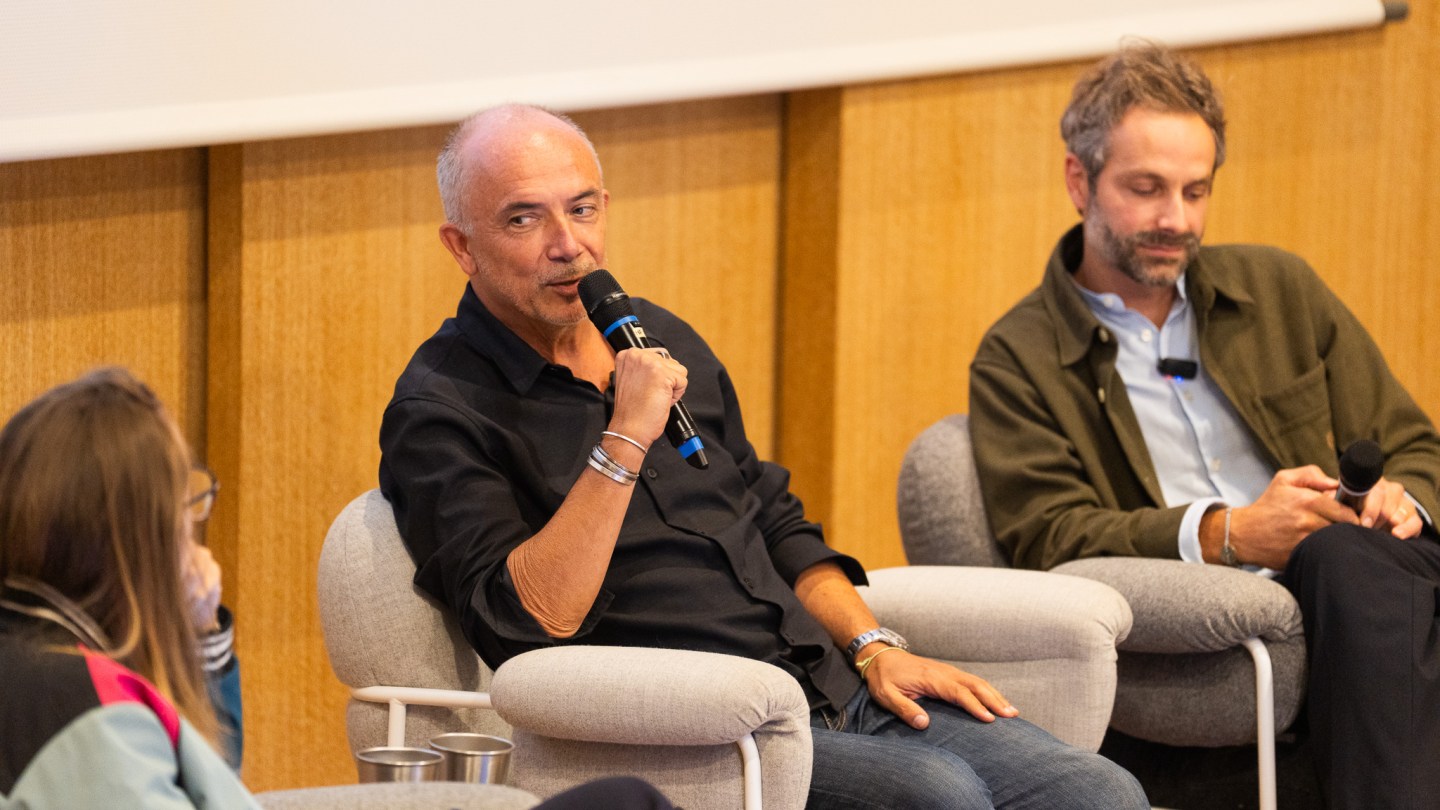
A panel moderated by Les Échos journalist Charlie Perreau picked up that thread with Inès Salhi, Chief Product Officer at Payfit; Adrien Raffin of CBRE; and Albin Serviant, creator of Cortex House.
Here are five lessons from the evening for balancing AI’s promise and its results.
1. Start with the business problem, not the technology
New models and tools appear almost daily, and Raffin admitted CBRE is “constantly approached” by companies offering new solutions. “The important thing is not to start by asking which AI tool we should use,” he said. “We first need to understand where AI can create value.” For CBRE, that means finding inefficiencies and friction between departments before choosing any technology.
Salhi has come to the same view at Payfit. “The latest model is not necessarily what will make the biggest difference to our customers or our productivity,” she said. Her team puts its energy into how agents are built and what information they can reach.
Babinet argued that the biggest gains come from rethinking how a business creates and delivers value. He pointed to Tesla, which has expanded from cars into software, charging, insurance, and autonomous driving, and suggested retail, real estate, and building management could see similar shifts.
2. AI adoption is moving from individual tools to connected workflows
Payfit introduced Payfit Copilot early as a knowledge-sharing chatbot, and it was adopted faster than any product the company had launched. Salhi described what came next. First, the goal was getting as many employees as possible comfortable experimenting. Then came shared agents and knowledge management. Now Payfit is building workflows that span customer support, product, and sales.
“These are no longer individual productivity tools,” Salhi said. “They are collective workflows.”
Letting employees pick their own tools helped early adoption. Once teams started building shared agents, Payfit moved most of them onto one platform so they could stop debating tools. Babinet sees this across the industry, with more of AI’s value now coming from the orchestration and workflows built around the models.
3. Company knowledge is now a competitive asset to protect
Babinet warned about the risk to what he called a company’s “cognitive image,” its collective knowledge of how it actually operates. With agentic AI, he said, access to a company’s internal communications and systems could let another organization reconstruct much of its operating model. He expects more companies to keep sensitive data on private infrastructure and use external models for specific tasks.
The panelists described how they handle this today. “When we build an AI agent for our customers, it must operate with exactly the same permissions as the person using it,” Salhi said. Payfit applies the same rule internally and reviews each new connector, since information hidden in an app’s interface can sometimes still be reached through an integration. At CBRE, where data is “a significant part of the value we provide to our clients,” AI has been introduced gradually in secure environments. Serviant pointed out that the connections between systems can be vulnerable even when each application is secure.
Raffin admitted the caution has a cost. By the time a new tool is approved, the technology may have moved on. “It is a constant balance between moving quickly and protecting the business.”
4. AI can unlock talent in unexpected places
At Payfit, Salhi said, some employees “we hadn’t necessarily identified as technology leaders” were already building sophisticated tools for their own teams. Some of them disagreed with her about where to start. She let them try their approach, and “what they produced was far more impressive than what I had originally imagined.”
Raffin has seen something similar at CBRE, where many of the strongest adopters know their market deeply but aren’t especially technical. “And it isn’t necessarily younger employees who are leading the way,” he said. Some experienced colleagues now act as ambassadors in the company’s internal AI communities. He also expects access to AI tools to matter more in hiring, as people come to expect them from employers.
5. AI makes people more autonomous, which makes collaboration more important
Serviant described what happens when you start building an agent or a side project: “suddenly it is two or three in the morning.” He sees real risks of exhaustion and isolation now that one person can build an entire financial model alone. “Technology should not mean that everyone ends up working alone,” he said.
At Payfit, Salhi’s response has been to build agents as a team, so that “no one is left alone facing the technology.” She also urged managers to try the tools themselves to understand what their teams are going through. The effect surprised her: “We have never worked so much together or thought so much together.”
Serviant founded Cortex House on a similar idea. France’s AI ecosystem is still fragmented, he said, and the people shaping it need a place to meet. Companies need the same thing internally. As AI changes how work gets done, the role of the workplace is evolving too: creating opportunities for people to connect, share knowledge and innovate together.
What this means for business leaders
By the end of the night, the panel had answered much of Babinet’s opening question, and very little of the answer was about choosing better models. The companies seeing results started with a business problem, gave employees room to experiment before standardizing on shared workflows, and found that some of their best AI builders weren’t the people they expected.
Babinet also reminded the room that the stakes go beyond any single company. He called AI an anthropological shift and argued that its productivity gains should be widely shared.