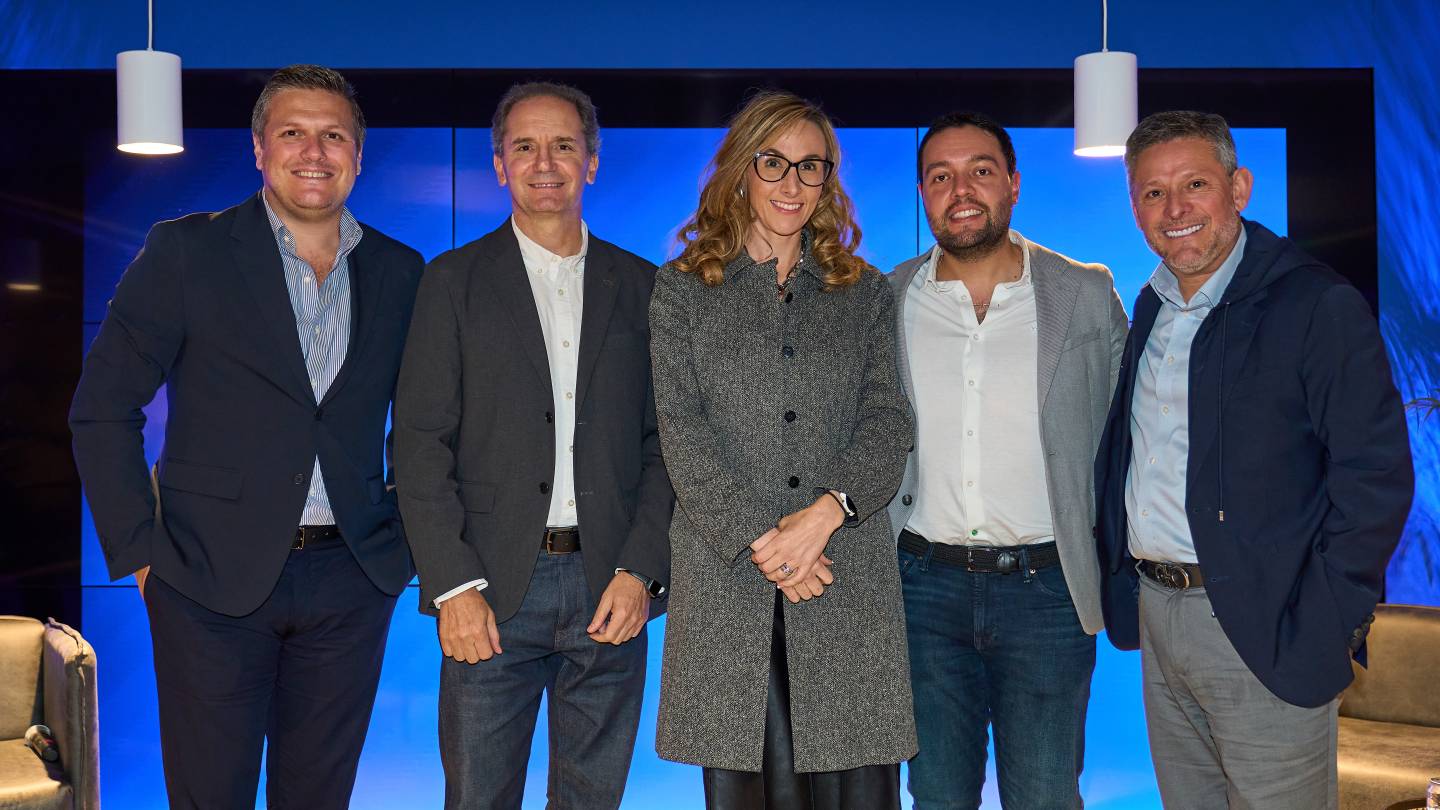
WeWork for Business is a WeWork event series for the people who decide how companies work: enterprise executives, real estate leaders, and brokers. Hosted this year in New York, Paris, and Mexico City, each edition combines a keynote, a panel, and an evening of networking, with an eye on ideas leaders can apply to their own workplace and real estate plans.
Mexico City hosted the series’ Latin America debut on October 8 at WeWork Lago Alberto 375. Two themes ran through the evening: what it takes for AI to deliver results, and what the office needs to become as AI changes how people work.
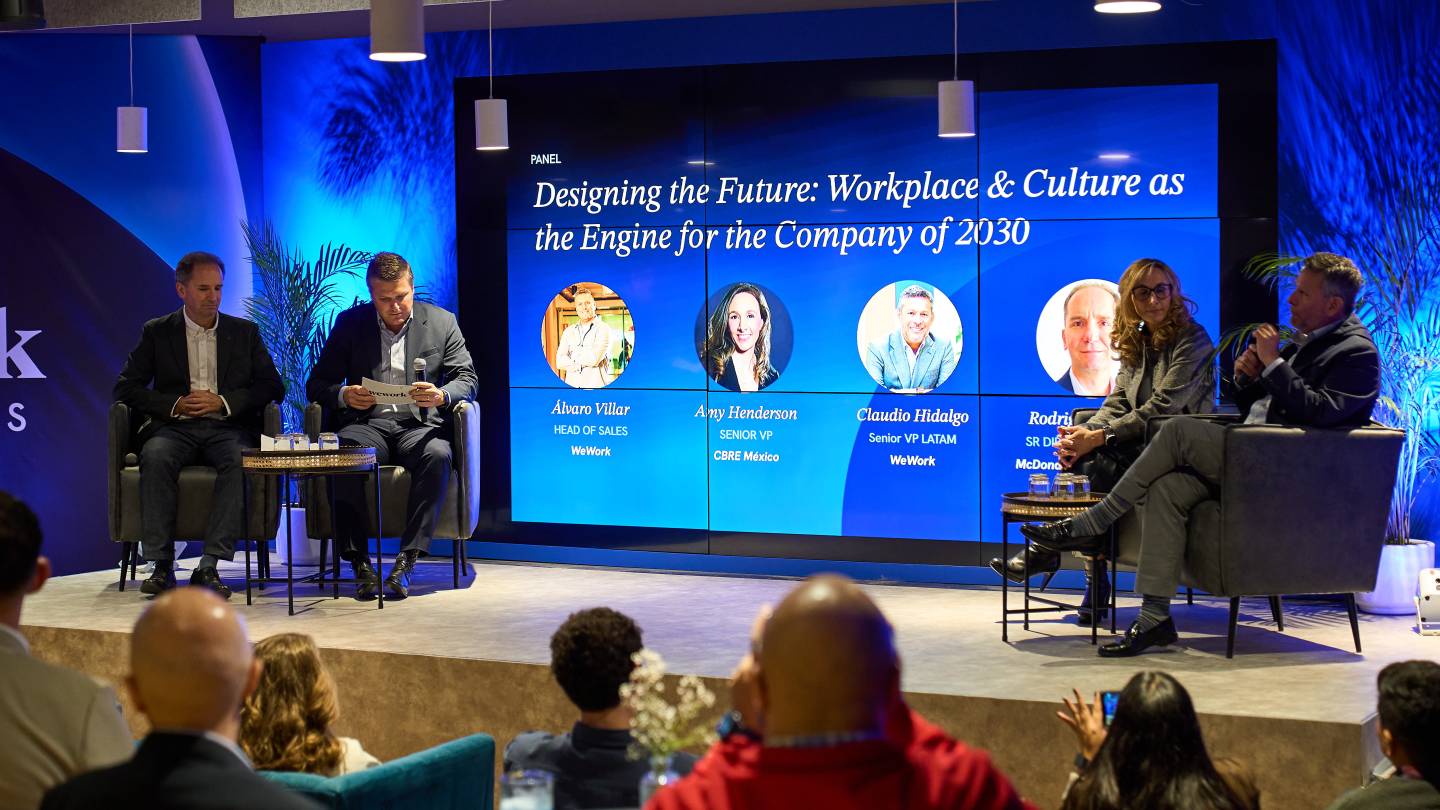
HubSpot Mexico country manager Ricardo Urrea took on the first theme in his keynote, Growing Better in the Era of AI. WeWork’s head of sales for Spanish Speaking in Latin America, Álvaro Villar, then led a conversation on the workplace of 2030 with Amy Henderson, Senior Vice President at CBRE; Rodrigo Reygadas of McDonald’s Global Office in Mexico City; and Claudio Hidalgo, Regional President of WeWork Latin America.
In an evening full of insight and engaging discussion, five ideas stood out.
1. More AI doesn’t mean more results
Urrea opened by asking who in the room uses AI every day. Nearly every hand went up. Adoption, he argued, is no longer the issue. HubSpot research shows 90% of companies use AI, but only half have a clear roadmap for it, and just 6% see tangible business results. Meanwhile, 88% of leaders feel pressure to prove AI’s return on investment.
He called the rush to try every new model, agent, and tool “the era of maxxing,” and said it leaves teams exhausted and feeling behind. His proposal is to trade it for an era of results, with fewer, better-connected tools. The payoff is real: the 6% are four times more likely to hit their financial goals. “Artificial intelligence isn’t about using more, it’s about getting results.”
2. Context is the real advantage
For Urrea, what separates the 6% is context: up-to-date knowledge of the business, its customers, and its teams. Without it, AI becomes a new teammate that has to be trained and supervised. Its results must also be audited. In HubSpot’s Mexico data, 54% of respondents say they spend significantly more time reviewing AI-generated content.
“The magic of AI is not in the model,” he said. “What truly brings magic to artificial intelligence is context.” The stakes run both ways. “An AI with bad context is even worse than having no AI at all,” because it speeds up mistakes. With full context, the gains compound over time.
3. No one knows what 2030 looks like, so plan for flexibility
“Nobody knows!” Hidalgo said of the 2030 office. That makes a million-dollar office fit-out designed for today a risky bet. He argued instead for putting flexibility at the core of real estate decisions. He described an airline in Chile with 1,200 fully remote tech employees that wanted to bring them back. WeWork’s utilization analysis showed it needed space for about 300, with different zones for collaboration and focus, policies driven by employee experience, and schedules measured in hours rather than days.
Henderson validates the change from CBRE’s clients. The first question used to be how many square meters they needed. Now it is about utilization and optimization: how many people come in each day and what they will do there. Hidalgo’s advice: “Friction is reduced by listening.”
4. The office is starting to feel like home
Hidalgo said younger generations want offices that feel human: dining-room chairs, libraries with armchairs, and lunches that stretch into meetings. Demand for WeWork’s new rest areas has been strong, and some companies are even bringing back cubicles as short-stay focus spaces. “Offices are going to look more and more like my home.”
The office still draws people in. Henderson said a CBRE survey found more than 40% of respondents go in five days a week, with well-located, amenity-rich buildings in corridors like Polanco, Reforma, and Lomas leasing first. Reygadas, whose McDonald’s Global Office team grew to more than 280 people in two years, treats the office as a tool for culture. It carries the full brand, from an in-office McCafé to a Happy Meal toy display, so “people feel part of the company.”
5. As AI takes the tasks, leaders own the human side
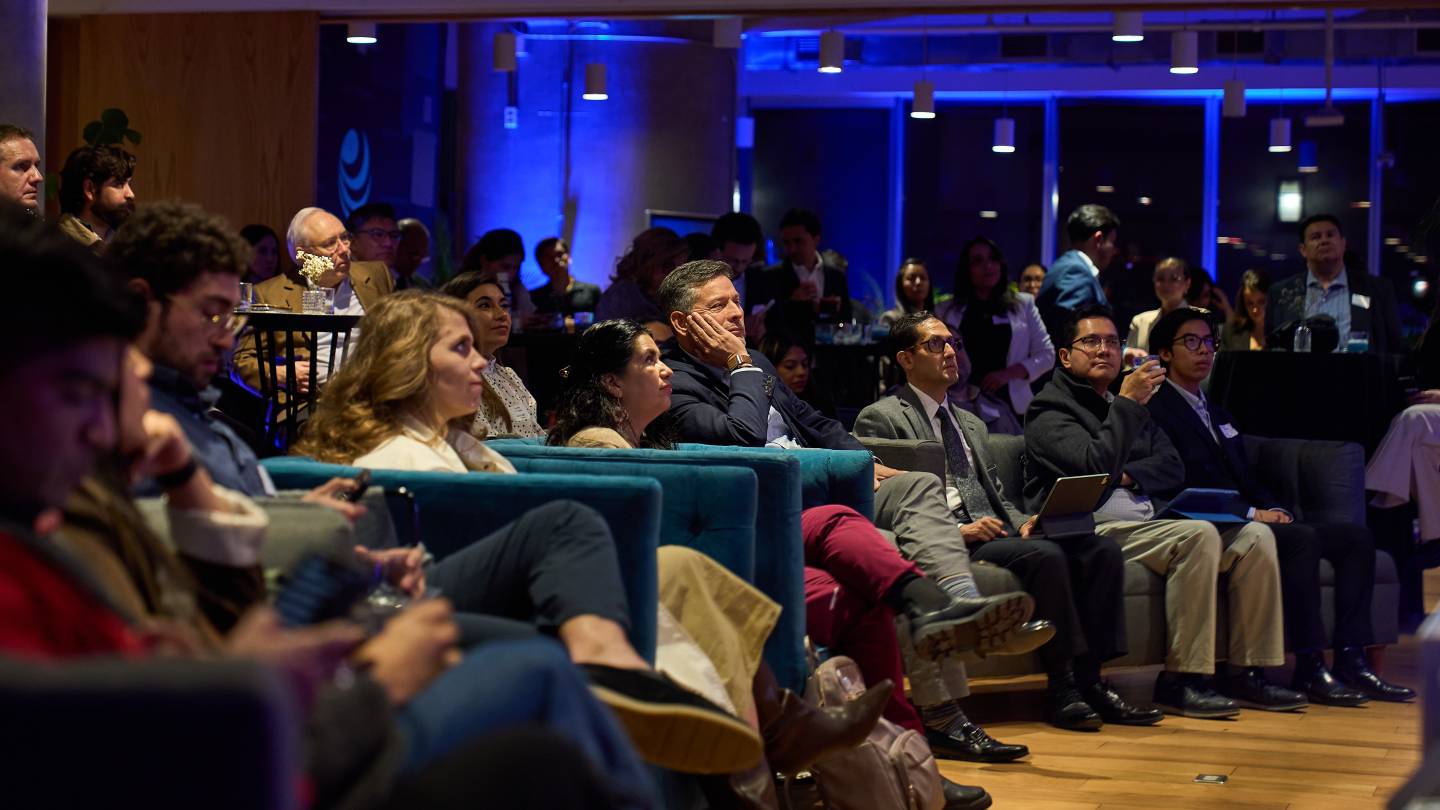
Hidalgo called AI “an enemy of coming to the traditional office.” If the transactional work people once did at their desks is automated, there is one less reason to come in. The solution is designing a space built for conversation and relationships, which AI won’t replace. Even the event attendees’ armchairs, he noted, were chosen on purpose over rows of chairs.
Reygadas said leaders now need to focus on purpose, belonging, and developing talent, because supervising tasks matters less when AI handles them. At McDonald’s, no agent operates entirely on its own; decisions “must always fall on a human.” His advice for 2030: “Artificial intelligence and technology won’t take your job, but someone who knows how to use and leverage it will.”
The thread between AI and the office
Urrea and the panel started from different places, one from customer data and the other from the workplace, but they arrived at the same point. AI delivers when it has the right context about a business and its customers. The office delivers when it is designed around how people actually work, not around how many desks fit.
Villar summed it up as the evening turned to networking: “little is set in stone for 2030, there is a great need to adapt, to be flexible, and to listen a lot.”