


Coworking can sound daunting to some. Communal tables, consistent conversation, someone always wanting to grab coffee, and “pick your brain.” If that image has kept you working from home, you’re not alone.
But that image of coworking is incomplete. The best coworking for introverts doesn’t look like a networking event. It looks like a well-designed space where you can be around people without being inundated with people. Structure without performance. Company without obligation.
Roughly, between 30% and 50% of the population describes themselves as introverted, according to research cited by Susan Cain in Quiet. That means, in any coworking space, a significant share of the people around you feel the exact same way you do.
The “alone together” sweet spot
What makes working from home difficult for introverts is the flatness. Days blur. The social muscle weakens. The loneliness starts creeping in. Introversion doesn’t make you immune to isolation; it just means you reset after social interaction differently than an extrovert does.
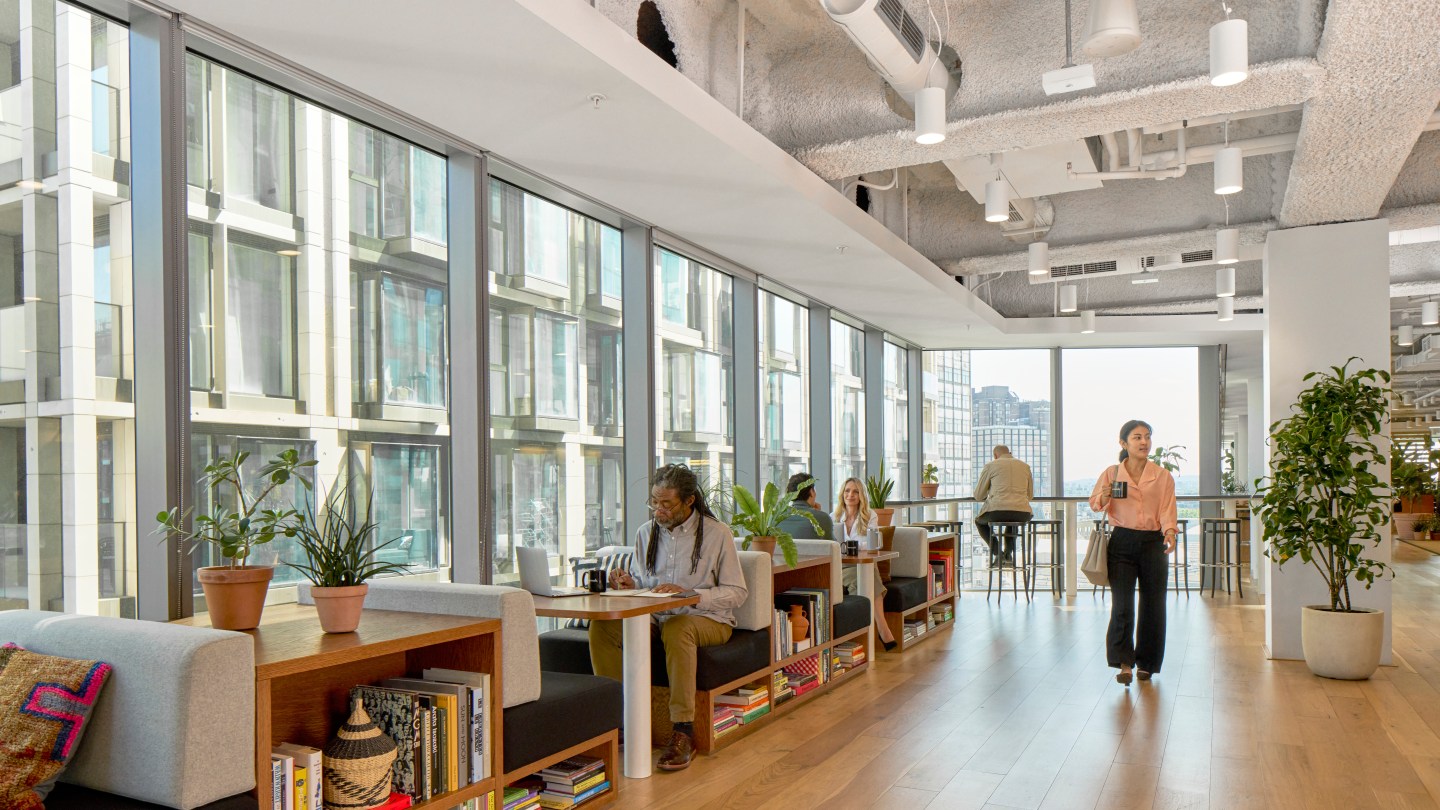
That said, are coworking spaces good for introverts? They absolutely can be, when the space matches how you’re wired. The sweet spot is ambient sociality: other people nearby, background motion and energy, the sense that you’re part of a working world, but no expectation that you engage unless you choose to. Think of it like reading a book in a café versus reading it in an empty apartment. The material is the same, but the café version often feels better.
The right shared space gives introverts social proximity without social pressure.
What to look for before you sign up
Not all coworking spaces are built the same, and the details matter more for introverts than for most. When you tour a space or browse one online, pay attention to a few specific things.
- Quiet zones. This is non-negotiable. A quiet space (or at least a quiet floor or section within one) means you have somewhere to retreat when the main area gets loud.
- Phone booths and private rooms. When your coworking space is too noisy for a call or deep-focus work, you need somewhere to close a door. The best introvert-friendly offices have phone booths and small bookable rooms scattered throughout.
- Layout variety. A space with nothing but long communal tables is designed for one mode of work. Look for a mix: solo desks along a window, comfortable seating in a quieter area, and a few communal zones for the times you actually want to be around a group. Variety means you can match your seat to your energy on any given day.
- Community without compulsion. On-site staff is one of the most introvert-friendly features a space can have, because they handle introductions, so you don’t have to. Ask whether the space hosts structured events with clear agendas (a lunch talk, a workshop, a skill share) rather than only open mixers. Structured events give you something to do besides stand in a room full of strangers.
What you’re looking for, ultimately, is control. The best workspace for introverts is one where you choose your level of interaction instead of it being chosen for you.
Daily tactics that protect your energy
Choosing the right space is step one. How to work in a coworking space as an introvert day to day comes down to small, repeatable habits.
- Arrive during off-peak hours. Most shared spaces are busiest between 10 a.m. and noon. Arriving at 8 or 8:30 lets you settle in, claim your preferred seat, and build a focused groove before the energy ramps up. By the time the space fills in, you’re already locked in.
- Use headphones as a signal. This is universal coworking etiquette, but for introverts, it doubles as a boundary tool. Noise-canceling headphones tell the room you’re in focus mode without requiring you to say a word.
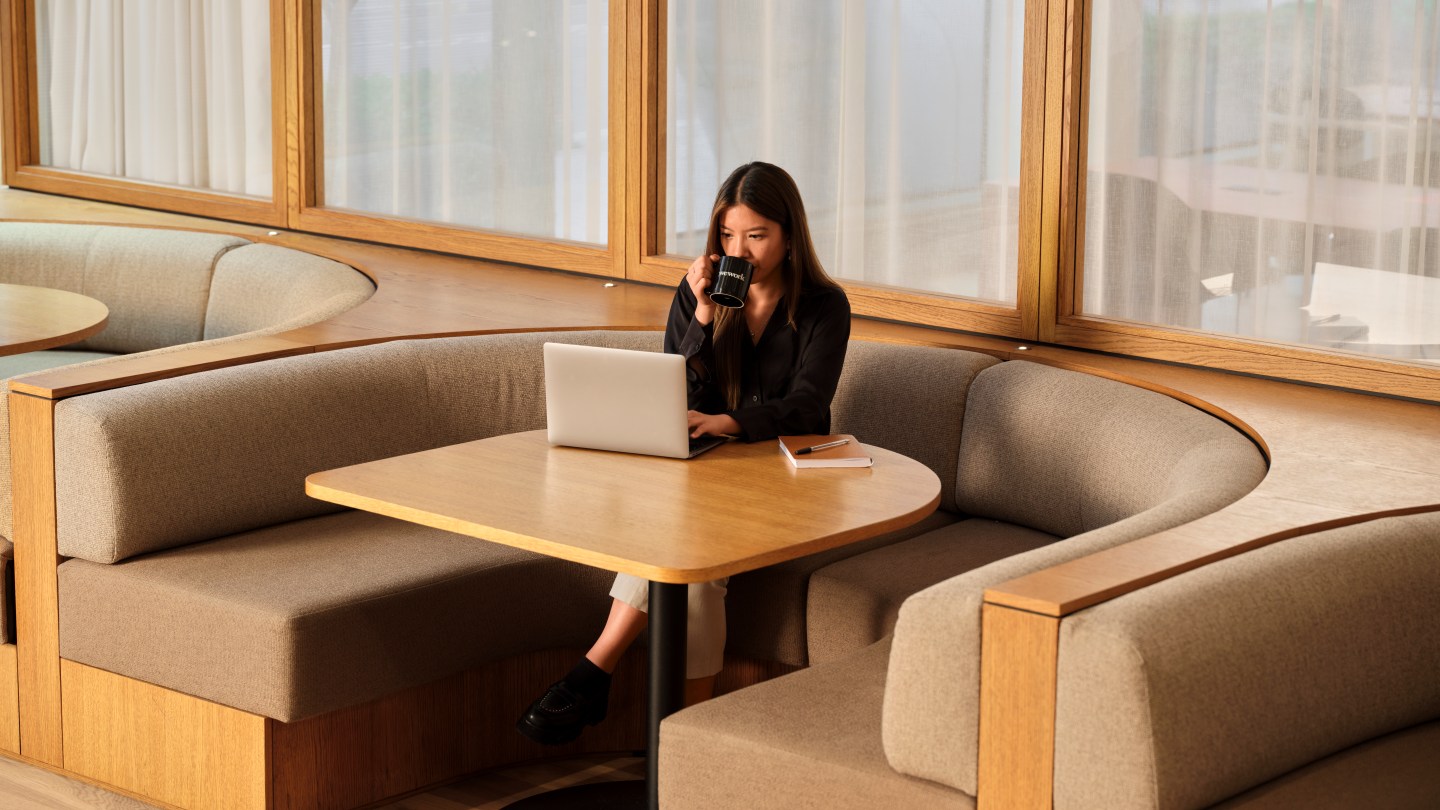
- Pick your seat intentionally. Avoid high-traffic zones: the area near the front door, the seats closest to the kitchen, and the row next to the printer. A seat along a wall or near a window with your back to foot traffic gives you the most visual and acoustic privacy. Your seat choice is your first line of defense against overstimulation.
- Build a routine, not a social calendar. You don’t need to eat lunch with someone every day. Having a predictable rhythm, the same arrival time, the same mid-morning break, the same end-of-day wind-down, creates a sense of stability that lets you spend less energy on logistics and more on actual work.
Small adjustments to when you arrive, where you sit, and how you signal your availability can transform a draining environment into a productive one.
Connection on your own terms
How to network as an introvert in a coworking space might sound like a contradiction, but it doesn’t have to be. The key is redefining what “connection” looks like for you.
You don’t need to work a room. You need one good conversation. A quick chat with the dedicated staff in your first week can lead to an introduction to one or two people who share your industry or interests, and that’s enough.
Structured events also tend to work better for introverts than open mixers. A lunch-and-learn on a topic you care about gives you a reason to show up and a built-in conversation topic. You’re not networking. You’re just attending something interesting and talking to whoever’s sitting next to you.
And one of the most underrated introvert strategies: become a regular. When you show up to the same space on a consistent schedule, familiar faces appear naturally. The barista at the micro-kitchen starts to recognize you. The person who sits two desks over nods hello. These may not be deep relationships, but they’re connective tissue. They make the space feel like yours.
The best connections for introverts tend to happen slowly, repeatedly, and without a name tag.
Which membership fits?
If you’re weighing options, a dedicated desk or a private office offers the most consistency and the least daily friction. You arrive, your space is there, and you don’t need to negotiate for a spot. That predictability is worth a lot when you’re already spending energy managing your environment.
If budget is a factor, a hot-desk membership at a space with strong quiet zones and phone booths can work well too. Just plan to arrive early enough to get the seat you want.
WeWork locations tend to include the features that matter most for this: phone booths, bookable conference rooms, quiet areas, and on-site staff who can ease you in at your own pace. A day pass is a low-risk way to test whether a particular space fits your energy before committing to anything longer.


