


You skipped lunch because you were mid-thread. Every Wednesday, you’re taking the 5 PM call from the same chair you sat in at 8 AM. The weekend is around the corner; it will come and go, and you just know you will spend Sunday dreading Monday.
It’s not that the work is bad. It’s the way you’ve been going about it recently that has finally worn you out. Mind Share Partners’ 2025 Mental Health at Work Report found that 76% of U.S. workers experience some level of burnout, with more than half reporting moderate to severe levels. You’d think that is a productivity problem, when in reality, we’re not talking about personal failure. We’re talking structural issues: workload, management, but also, the physical environment where you spend 8+ hours a day. That last part is where most people have the most immediate power to change.
Employees at companies that actively support mental health are twice as likely to report no burnout or depression, according to the same report. Support is a network, and besides wellness apps and EAP numbers, it includes workspaces designed so that recovery is built into the day and not treated as an afterthought. Let’s explore what such a workspace looks like.
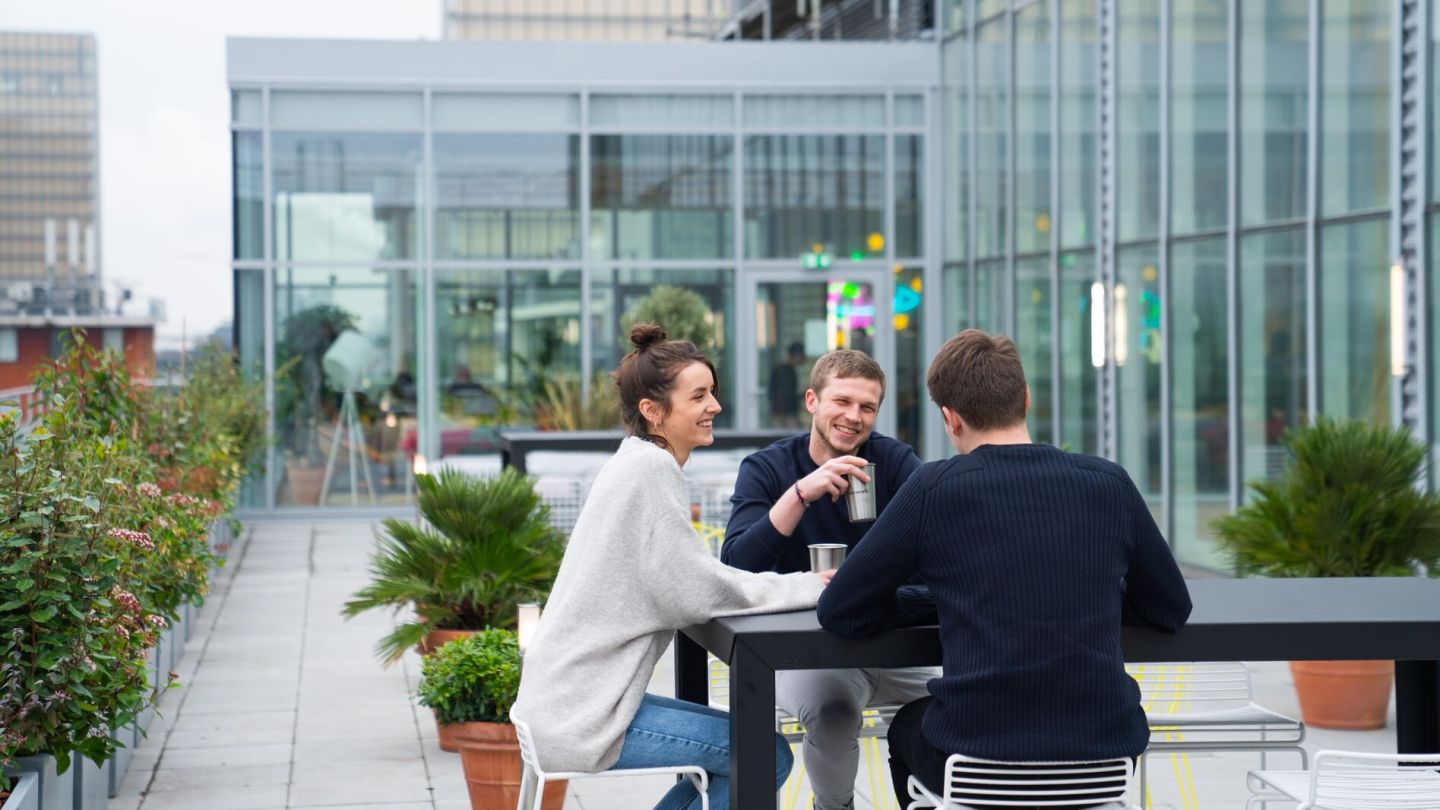
Light and nature aren’t luxuries
Spaces with poor lighting, constant noise, no access to privacy, and no way to step outside accelerate the burnout cycle. Spaces that are the opposite interrupt it.
This is where the design research gets interesting. A Human Spaces study of 7,600 office workers across 16 countries found that employees in workplaces incorporating natural elements reported 15% higher well-being, 15% more creativity, and 6% more productivity than those in conventional offices. A 2025 neuropsychological study went further, finding that even brief exposure to biophilically designed indoor environments produced measurable decreases in fatigue, depression, and anxiety, alongside increases in energy and attentiveness.
Natural light and productivity at work go hand-in-hand. If you work from a dark room or a home office with one small window behind your monitor, the absence of daylight is shaping your mood and your energy curve throughout the day.
The spaces where burnout slows down tend to have one thing in common: they bring the outside in.
What a wellness-forward workspace looks like
The short answer is: quiet zones, outdoor terraces, places to rest, and come back to work with something left in the tank. A wellness room.
A wellness room at work gives you a private, lockable space where you can close the door and breathe for ten minutes between meetings. It’s a practical recovery tool, the same way a phone booth is a practical call tool. Much like that phone booth, the wellness room only sounds minor until you’ve spent months without one.
Outdoor access does something similar. A short walk on a terrace gives you fresh air and natural light. It is a break in the day, a respite from your screen and chair, resetting the nervous system in ways a coffee break at your desk simply cannot.
Coworking spaces with wellness rooms and outdoor terraces are designed around this idea: the workday should have texture, not just tasks.
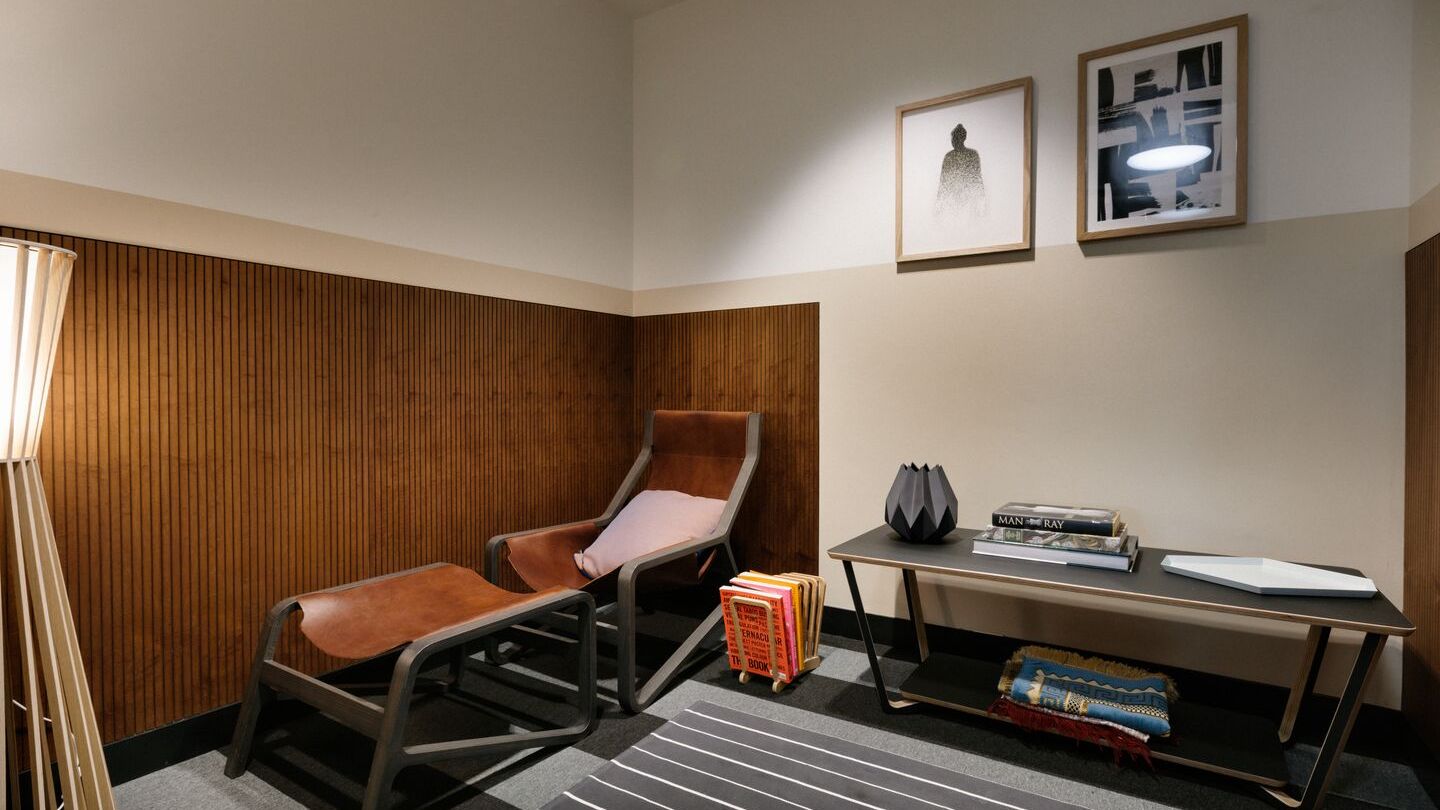
Building a healthier day, one space at a time
How to prevent burnout with your work environment is all about using the space you’re in more deliberately.
Book recovery time for yourself the same way you’d book a conference room for a call. If your workspace has a wellness or meditation room, block ten minutes on your calendar after your most draining meeting and use that amenity. Think of it as a necessity rather than a reward.
If there’s an outdoor terrace or even a walkable area outside, use it at lunch. Screens stay at the desk while you enjoy the fresh air. Remember that short physical breaks during the workday preserve energy and reduce fatigue, and the effect is stronger when those breaks happen outdoors or in natural settings.
If you’re working from home and none of this is available to you, we must be honest: a plant just won’t do it, and a coworking space is worth considering. A coworking space with built-in wellness features gives you access to the spatial variety that a home office, by definition, can’t offer. The change of environment alone (and leaving the house, working in a different room with different people and different light) can interrupt the patterns that keep burnout in place.
The best workspace for mental health is the one that makes it easy to alternate between work and rest throughout the day.
What WeWork locations offer
Most WeWork locations include wellness rooms and features that support a healthier workday rhythm: outdoor terraces for fresh air and light, phone booths for quiet moments or private calls, micro-kitchens that make it easy to eat regularly instead of skipping lunch, and community events that provide social connection without the pressure of forced networking. The spaces are designed with natural light as a priority, with floor-to-ceiling windows at many locations.
None of these are luxury extras. They’re the spatial infrastructure of a workday that builds in recovery and not just output. If you’re looking for a burnout recovery workspace that offers structure, variety, and the physical conditions to feel better at the end of the day than the beginning, WeWork On Demand is a low-commitment way to test whether the environment makes a difference for you. And if it does, WeWork All Access unlocks countless such spaces in just as many cities, states, and countries.