


There’s a phase in every growing company where the workspace question gets complicated. When you were four or five people, you made do. Someone’s apartment, a coffee shop with Wi-Fi, or a couple of hot desks at a coworking space were good enough. Those settings worked because it only had to accommodate a handful of people who could coordinate over a group chat.
Then you hire your eighth person. Some time later, your twelfth. Suddenly, there are meetings that need a room, client calls that need quiet, and new employees who’ve never met the rest of the team in person. The setup that got you here is starting to strain, and you can feel it in small ways on a daily basis: people talking over each other on calls or laptops balanced on kitchen counters during all-hands meetings.
This is the moment when the workspace question gets real, and getting it right at each stage of growth is key to either avoiding overspending on space or scrambling to find room for people you’ve already hired.
The real risk is committing too early
When a team starts growing, your instinct might be to lock in something permanent: a two-year lease on a traditional office, enough desks for the team you plan to have by next year, maybe a little extra room to grow into. It feels responsible, like planning ahead.
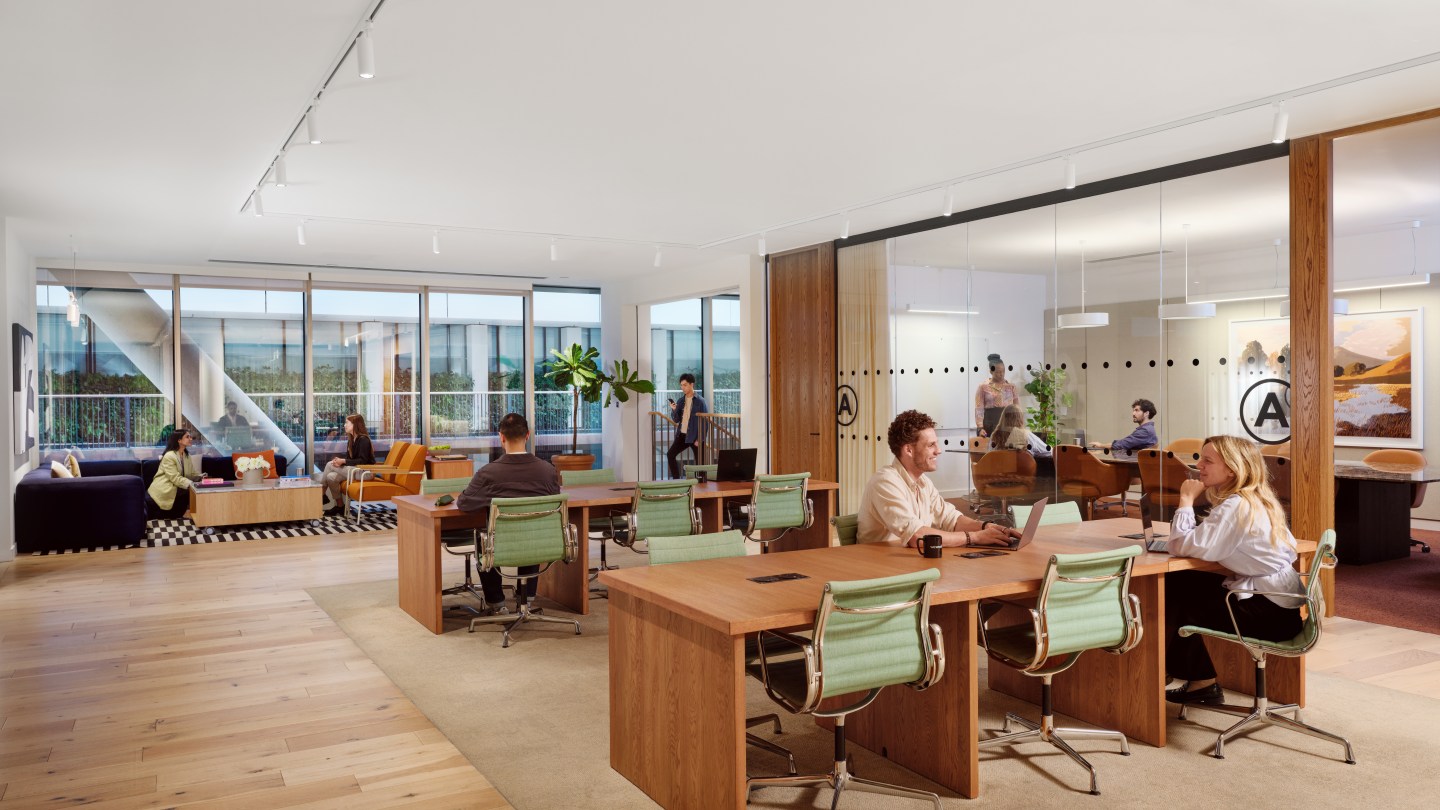
The problem? Early-stage growth is unpredictable. You might double your headcount in six months or go through a quiet stretch where hiring slows down. A lease sized for 30 people feels like a smart bet until you’re 15 people rattling around in a space that’s half empty, paying rent on desks that nobody sits at, or you’ve grown beyond your projections and there aren’t enough desks for the majority of your workbase.
These are the very situations flexible memberships are made for. They let you pay for what you need now, then adjust as business needs evolve or the team changes. The specifics of which membership to choose, though, depend a lot on where you are in that growth curve.
Let’s get into it.
1. Five to ten people
At this size, your team probably still fits around a single table. What you need is:
- a reliable place to work together,
- a spot for calls that doesn’t involve whispering in a hallway,
- enough structure that new hires feel like they’re joining a real company with a real home base.
A small private office or a cluster of dedicated desks works well here. Everyone has a consistent place to sit, you can leave things set up between days, and there’s a sense of shared space that helps a small team feel connected. If a few people work remotely most of the week, give them access passes that enable them to drop in to the office when needed.
What matters most here: Unlike a traditional lease, you’ll likely have access to meeting rooms and amenities. WeWork’s coworking spaces include bookable conference rooms, a well-stocked kitchen, and the kind of everyday amenities that save a small team from setting up and maintaining their own.
2. Ten to twenty-five people
Things start to shift here. You likely have a few distinct functions now: sales, operations, maybe a small creative team. People need to concentrate and collaborate – sometimes separately, often at the same time. The open floor that worked at eight people starts to feel noisy at fifteen.
At this stage, your priorities are:
- Walls and doors for focused work, client calls, and confidential or tough conversations.
- At least one dedicated meeting room your team can count on being available.
- A way to give remote or part-time team members access without paying for seats they use twice a month.
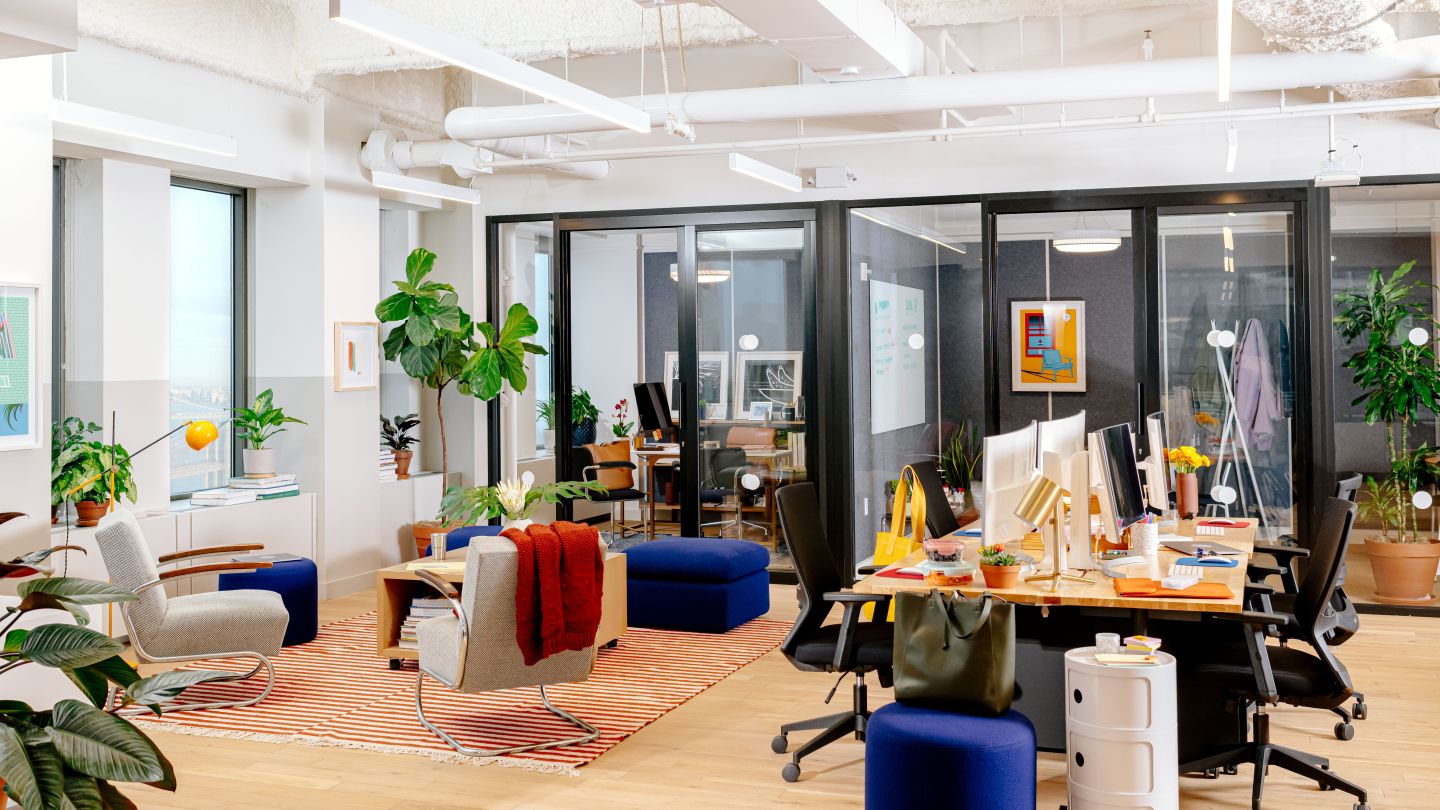
What works here: a mix-and-match approach. Your core team, the people who are in every day, are in a private office. Your part-time or remote team members are equipped with an All Access membership that lets them work from any location when they need to come in. And just like that, you’re covering everyone without sizing your space for peak capacity on the one day a month when the whole company happens to be in the same building.
3. Twenty-five to fifty people
At this scale, workspace becomes a core operational decision. You’re thinking about neighborhoods and commute times. You might need space in more than one city. New hires are forming impressions of your company culture the moment they walk through the door, and the workspace is a big part of that first impression.
The question shifts from “where do we sit?” to “how do we want to work?” The priorities at this stage look different:
- The ability to expand your footprint without renegotiating a lease every time you add five people.
- Enough flexibility to split across locations, maintain a HQ for collaboration days, or give the team flexible access for the rest of the week.
- A workspace that inspires and reflects your company culture to new hires and clients.
What matters most here: your arrangement can keep up with quarterly changes. WeWork’s membership structure allows for this kind of flexibility. You can scale your private office, open a second location in a different city, or adjust the mix of dedicated and flexible seats quarter by quarter, without renegotiating a contract each time.
Revisit more often than you think
The most common mistake growing teams make with workspace isn’t choosing the wrong membership. It’s choosing the right one for your needs at the time, and then forgetting to reassess. A setup that fits perfectly at 18 people can feel cramped at 26, and if you wait until people are frustrated to start looking for more space, you’re already behind.
A good habit is to check in on your workspace quarterly, around the same time you review headcount projections and budgets. A few questions worth asking:
- Is the space being used the way we expected?
- Are there days when it’s overcrowded, or days when it’s mostly empty?
- Has the team’s mix of in-office and remote work changed since we set this up?
These don’t have to be formal reviews. A quick conversation with your ops lead or office manager once a quarter is usually enough to stay ahead of the squeeze.
A workspace that grows with you
The conference rooms, phone booths, and common areas at WeWork are already in place at every stage, which means your team gets the same infrastructure at fifty people that it had at five, without furnishing or managing any of it yourself. You book what you need, use what you need, and adjust when things change.
Growing a team is unpredictable enough. Your workspace doesn’t have to be.
FAQs
What type of workspace membership is best for a team of five to ten people?
Can you combine different membership types as your team grows?
How often should a growing company reassess its workspace?
What does WeWork offer for teams at different growth stages?