


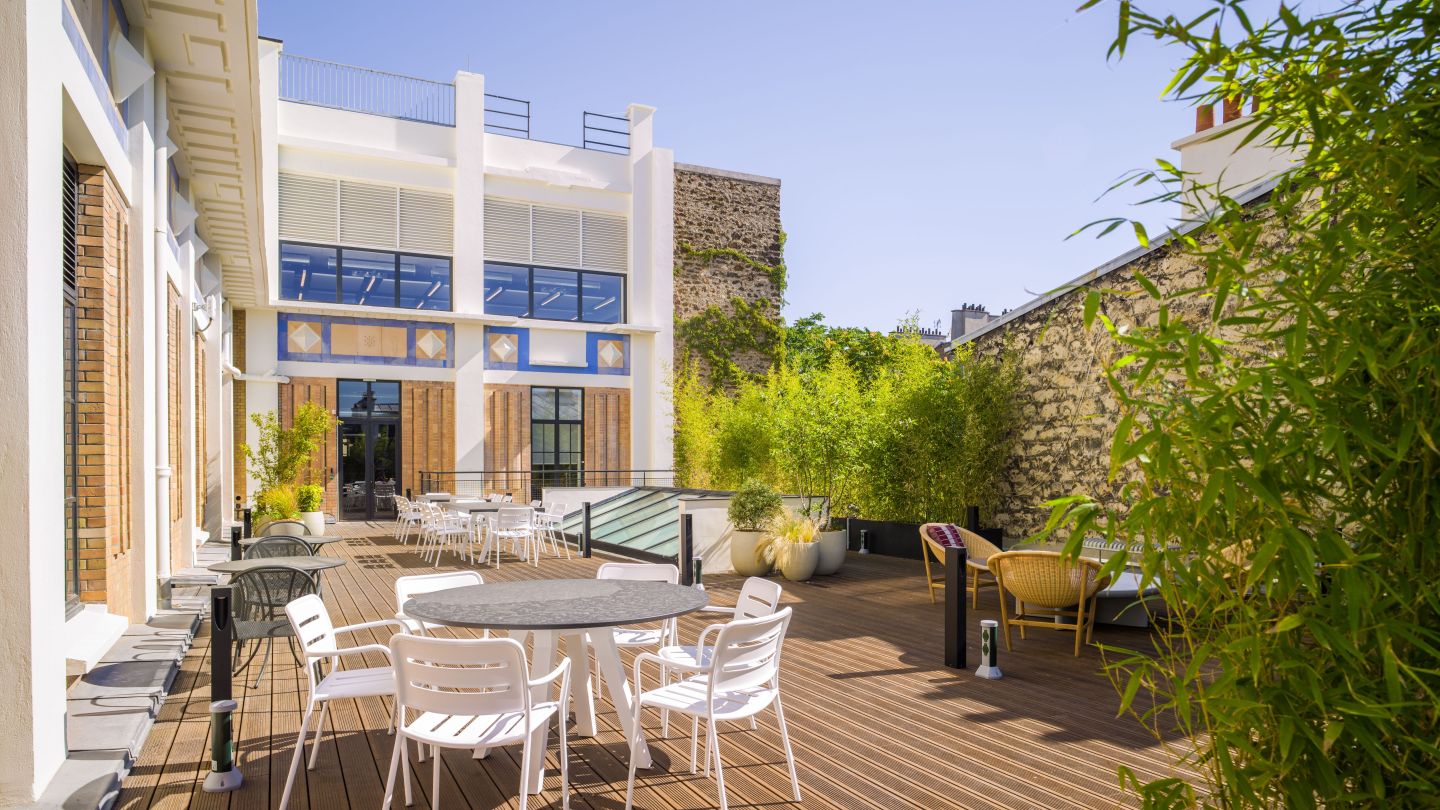
Two offices. Same company. Same roles. One office has floor-to-ceiling windows along the south wall, a row of planters between the desks, and a terrace where people start gathering for lunch the moment it gets warm enough outdoors. The other office has sealed windows, fluorescent lighting overhead, and a view of an air shaft. Over time, the first team’s sick day count is lower, their self-reported energy is higher, and their output is measurably better – all while having the same workload, management, tools, and processes. Why?
Because the first office enjoys plenty of natural light and greenery. It might sound too simple to be true, and yet, it’s what the research keeps finding, study after study, across thousands of workers and dozens of countries.
What the data tells us
The largest evidence base for biophilic office design comes from the Human Spaces study. Researchers surveyed 7,600 office workers across 16 countries and found that employees in workspaces incorporating natural elements reported 15% higher well-being, 15% more creativity, and 6% higher productivity compared to those in environments without them.
A 6% productivity gain sounds modest until you scale it. For a 200-person team, that’s the equivalent output of 12 additional full-time employees, without hiring anyone.
On the daylight side specifically, research by Dr. Alan Hedge at Cornell University found that workers in office environments with optimized natural light reported an 84% drop in symptoms of eye strain, headaches, and blurred vision. Workers close to windows that optimized daylight showed a 2% increase in individual productivity, which the study valued at roughly $100,000 per year for every 100 workers.
The data show the difference natural light and greenery make is real and physiological: they reduce physical discomfort and improve well-being and productivity in measurable ways.
It’s not just mood. It’s money.
The corporate benefits of office plants and daylight show up in absenteeism data and bottom-line costs.
UK Green Building Council research found that employees in workplaces with good daylight access take significantly fewer sick days. Terrapin Bright Green estimates that organizations save roughly $2,000 per employee per year in reduced absenteeism when biophilic features are present. For a 500-person company, that’s $1 million annually in productivity that would otherwise be lost to sick leave.
A 2024 longitudinal study published in Nature added another dimension: nature exposure in open-plan offices directly increases vigor (the feeling of energy and vitality), which in turn improves overall well-being. The mechanism is, natural elements actively restore the cognitive resources that focused office work depletes throughout the day.
It’s safe to conclude biophilic elements positively impact the employee’s health and, in turn, company-level costs. And while a single pothos plant won’t transform your workplace, a deliberate approach to daylight, greenery, and natural materials will.
How much greenery does an office actually need?
University of Oregon researchers found that a 12% green coverage ratio is where you start gaining well-being and productivity benefits. In other words, approximately one in eight surfaces you can see from your desk should be a plant, a natural material, or something green.
Placement matters as much as quantity. Plants grouped near communal areas, along walking paths between desks, and at eye level in meeting rooms deliver more benefit than a single large installation hidden in a corner. The goal is to keep natural elements within your field of vision as you move through the day rather than build one green showpiece to walk past on the way to your desk.
The same principle of proximity applies to natural light in office design. Dr. Hedge’s Cornell research found the strongest benefits among workers seated within 10 feet of a window. If your floor plan puts workstations in the center of the building and reserves window space for private offices or storage, you’re optimizing daylight in the wrong spaces.
What you can do at every budget
The right balance of greenery and natural light depends on your space, priorities, and budget.
Under $500:
- Move workstations closer to windows.
- Replace heavy blinds with light-filtering roller shades.
- Add desk plants at sightlines (pothos and snake plants, for instance, tolerate low light and need minimal care).
- Switch any harsh overhead fluorescents for warmer-tone LED panels.
$1,000 to $5,000:
- Add medium planters along walkways and in common areas.
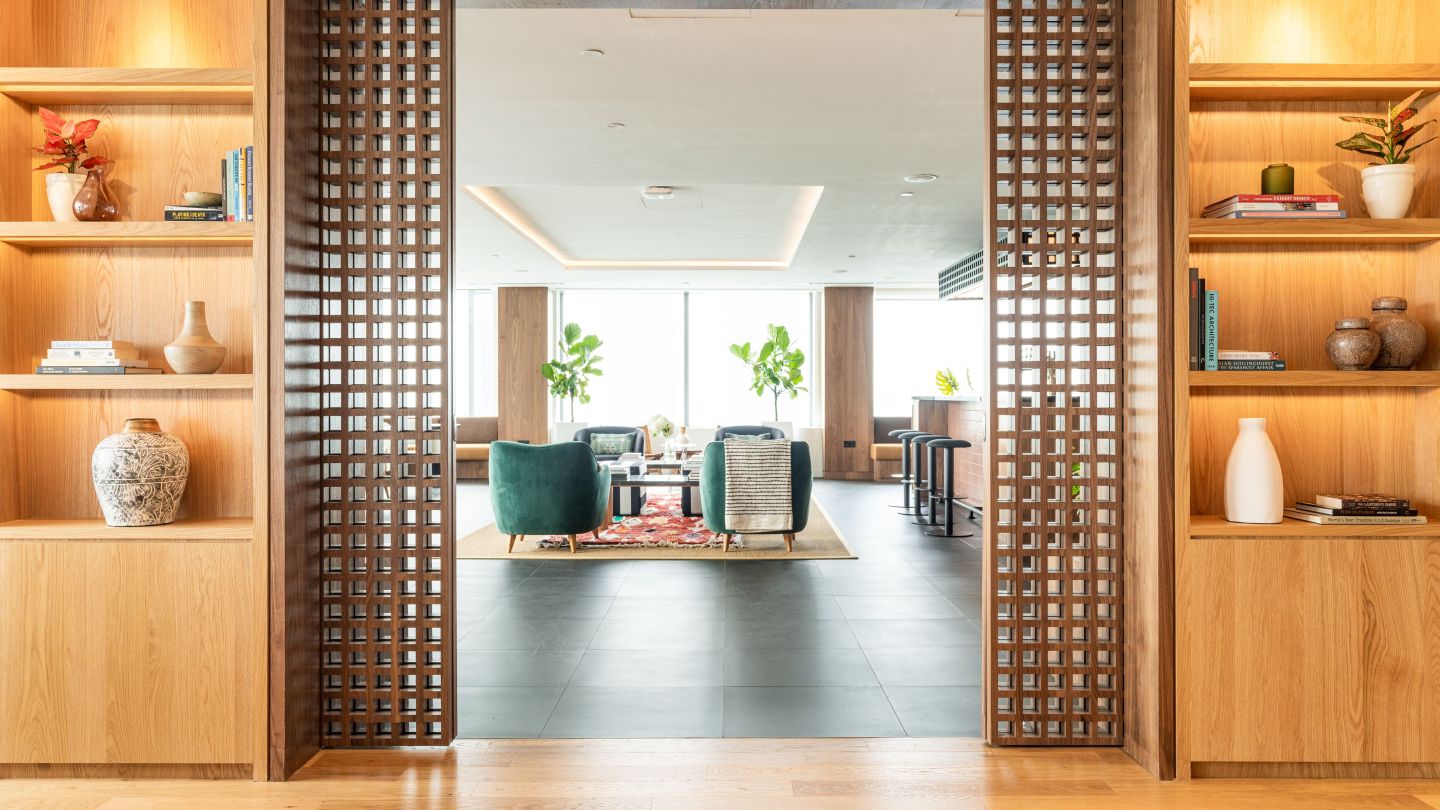
- Introduce natural materials where you can (for example, a wood-tone table in the kitchen, linen or felt acoustic panels instead of plastic ones, stone or clay accents in meeting rooms).
- Upgrade to tunable LED lighting that adjusts color temperature throughout the day, mimicking the shift from cool morning light to warm afternoon tones.
$5,000 to $50,000+:
- Preserved moss walls for acoustic and visual warmth.
- Larger planters integrated into room dividers.
- Smart glass that adjusts tint to optimize daylight without glare.
- An indoor water feature (if the space supports it).
Regardless of budget, the design decision with the highest ROI is the same: get daylight to where people sit, and get greenery to where people look.
The coworking shortcut
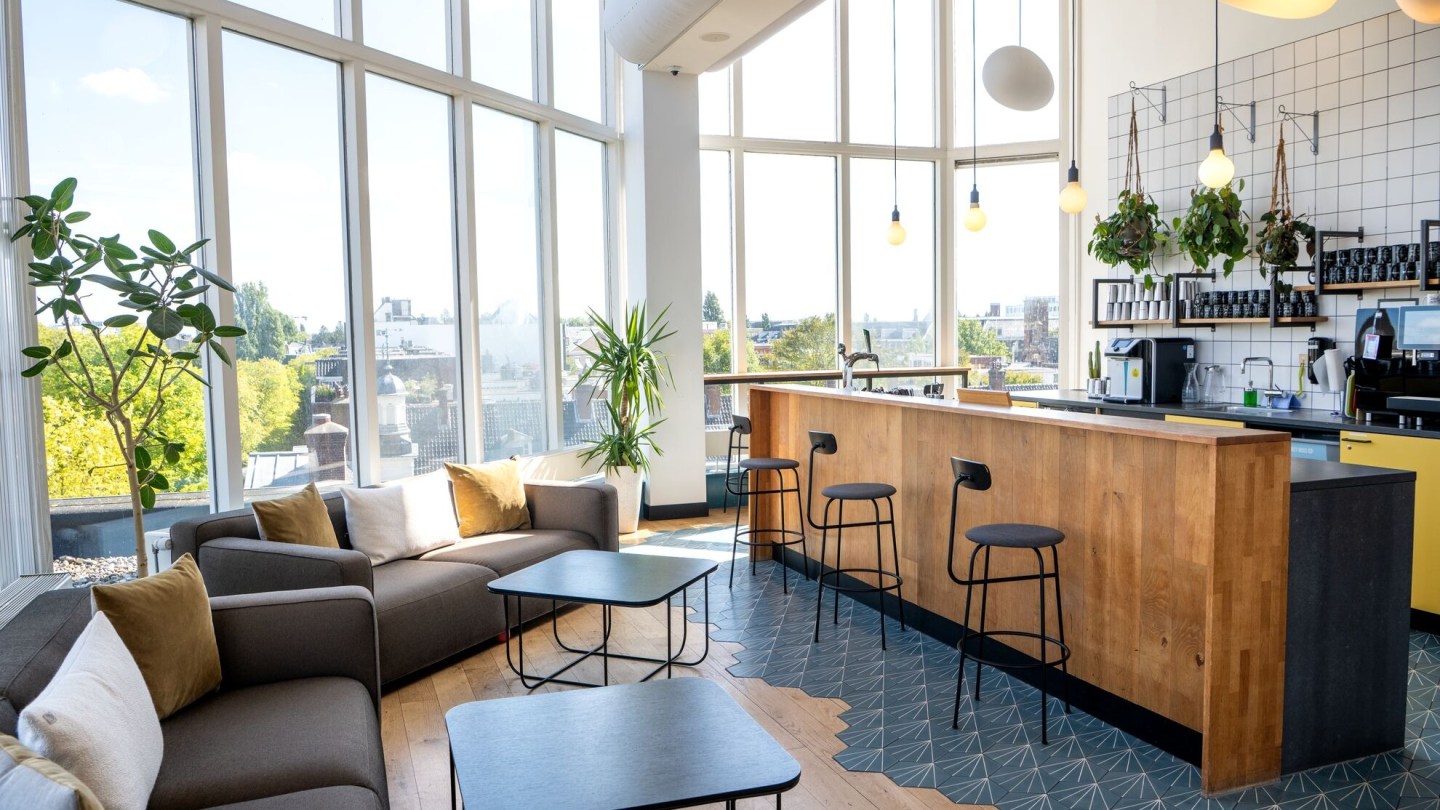
WeWork locations are designed with floor-to-ceiling windows that prioritize daylight in common areas and collaboration zones. Indoor plants and greenery are maintained throughout lounges and hallways. Outdoor terraces are available at select locations, giving members direct access to fresh air and natural light during the workday. Natural materials in warm tones and varied textures show up throughout every WeWork space.
These design choices come built into the membership. A flexible space that already incorporates biophilic principles is worth a serious look, especially for teams that need a high-quality environment without a renovation timeline.
FAQ
Does natural light really improve productivity?
How do plants in the office affect well-being?
How much greenery does an office need?
Is biophilic design expensive?
Does WeWork use biophilic design?