


If the past few years have taught small business owners anything, it’s how to stay nimble in the face of constant change. Fluctuating interest rates, rising operational costs, geopolitical tensions, shifting tax policies, and trade disruptions have demanded rapid decision-making and continuous adaptation.
The economic landscape is the most uncertain its been in the last 20 years. According to the Economic Policy Uncertainty Index, uncertainty this year reached an all-time high, surpassing the 2008 crisis and the 2020 pandemic. Ultimately, this means that lean teams are facing a new wave of tough choices, and where and how to work are the biggest.
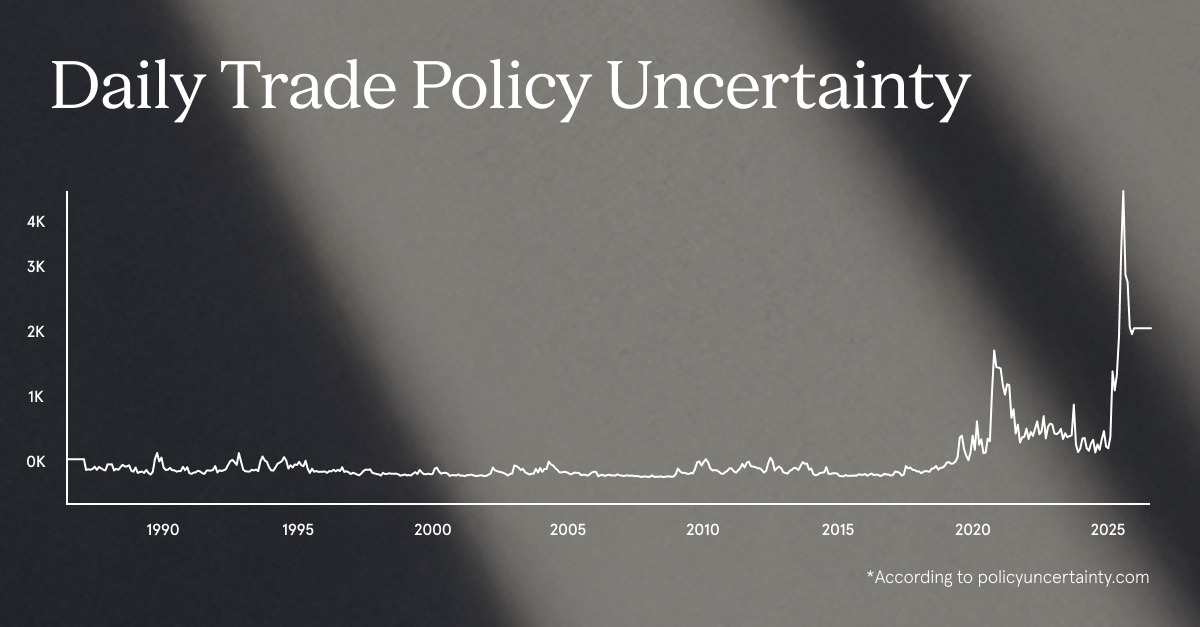
In 2025, workspace decisions are no longer merely logistical, they’re strategic. With increased tariffs and ongoing shifts in consumer demand, small businesses are under pressure to remain agile while keeping costs predictable. For teams of 1 to 9 people, office space isn’t just a background detail but a daily operational lever that directly affects productivity, team morale, and client perception.
This year, we’ve seen a surge in businesses reevaluating their traditional office setups. The volatility of 2025 has exposed just how risky long-term leases can be, especially for lean teams trying to navigate fluctuating revenue, new compliance costs, or changing hiring patterns. While flexibility was once a future-facing concept, it is now a requirement.
At WeWork, we’re seeing this play out every day. More small business owners are shifting away from fixed leases and moving towards flexible workspaces that accommodate their evolving business needs. They’re looking for:
- A setup that scales with their team size and cash flow
- A location that conveys professionalism without requiring capital investment
- A space where amenities, connectivity, and maintenance are already handled
These needs aren’t theoretical—they’re the result of real economic pressure in 2025. And increasingly, founders are choosing environments that can support how they work today and evolve to meet the market demands of tomorrow. Workspace isn’t just where you go, it’s how you grow.
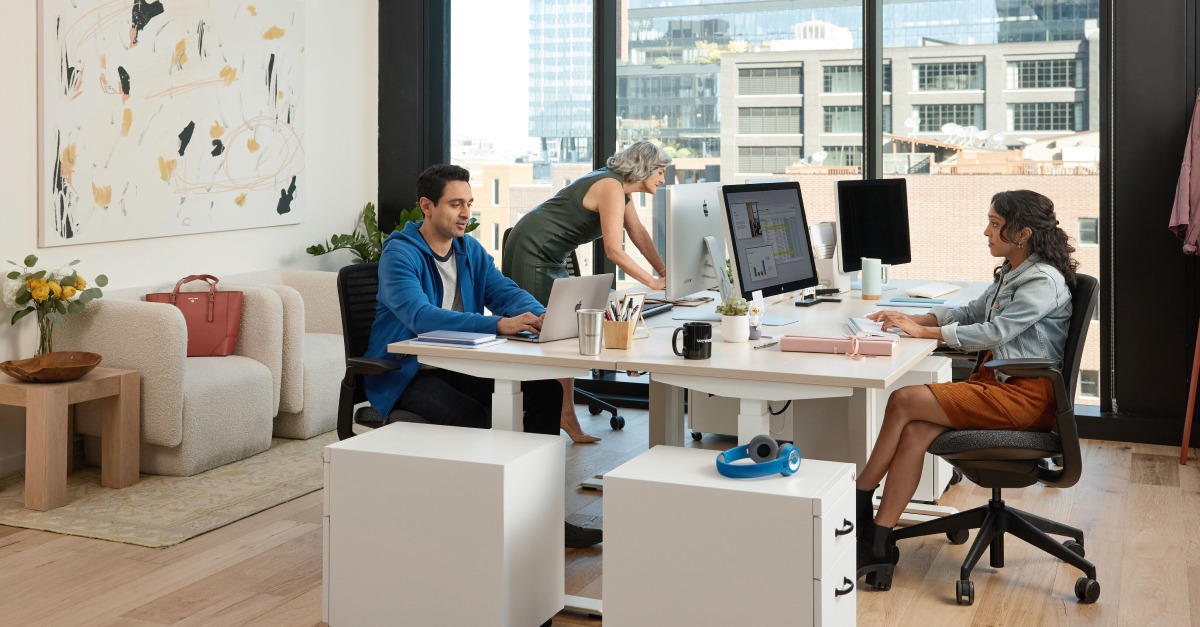
Small businesses across the country are responding to 2025’s economic pressures by tightening budgets, staying nimble, and rethinking how (and where) they work. From hybrid setups and on-demand workspaces to community-driven environments that foster collaboration, these companies are adapting fast to stay competitive. So, how can you keep up?
This guide breaks down five key factors shaping how small businesses operate in 2025. Whether you’re a solo founder upgrading from your kitchen table or a growing team navigating expansion without long-term risk, these insights will help you stay one step ahead—and make confident, growth-ready decisions in a volatile market.
I. Flexibility is the New Default
At the SEMAFOR World Economy Summit, John Santora, CEO of WeWork, raised an important question:
“With all the uncertainty around tariffs, who’s prepared to commit to a 10- or 15-year lease with $50 [million] or $100 million spend?”
This sentiment reflects a broader trend among small businesses. Rather than locking into long-term leases, many are opting for flexible workspace solutions that allow them to adapt quickly to changing circumstances. According to a September 2024 WeWork survey, 59% of companies planning to expand their workspace in 2025 and 2026 are opting for flexible solutions. These solutions help mitigate financial risk and also provide the agility needed to respond to market fluctuations.
In other words, flexible workspaces offer real advantages, such as:
- Scalability – Businesses can adjust their space requirements in real-time, scaling up or down as needed without the constraints of traditional leases.
- Cost Efficiency – By avoiding large upfront investments and long-term commitments, companies can allocate resources more effectively, focusing on growth and innovation.
- Operational simplicity – With amenities like high-speed internet, cleaning services, and maintenance included, businesses can reduce administrative burdens and concentrate on their core operations.
II. Workspace That Works for You
If you’re a founder or small business owner, you know that time is your most precious resource. Managing mundane things such as cleaning, internet, and office supplies shouldn’t be part of your job description. But you also know that more often than not, it is.
A 2024 study conducted by Slack, a Salesforce company, found that small business owners lose an average of 96 minutes of productivity daily due to various inefficiencies, including administrative burdens. This amounts to nearly three weeks of lost time per year. By opting for a flexible workspace and a partner such as WeWork, you can get that time back.
“When everything is taken care of, our members can focus fully on their clients, products, and teams—not garbage pickups or Wi-Fi issues,” – Dorothy Brown, Head of US & Canada SMB & Digital Sales.
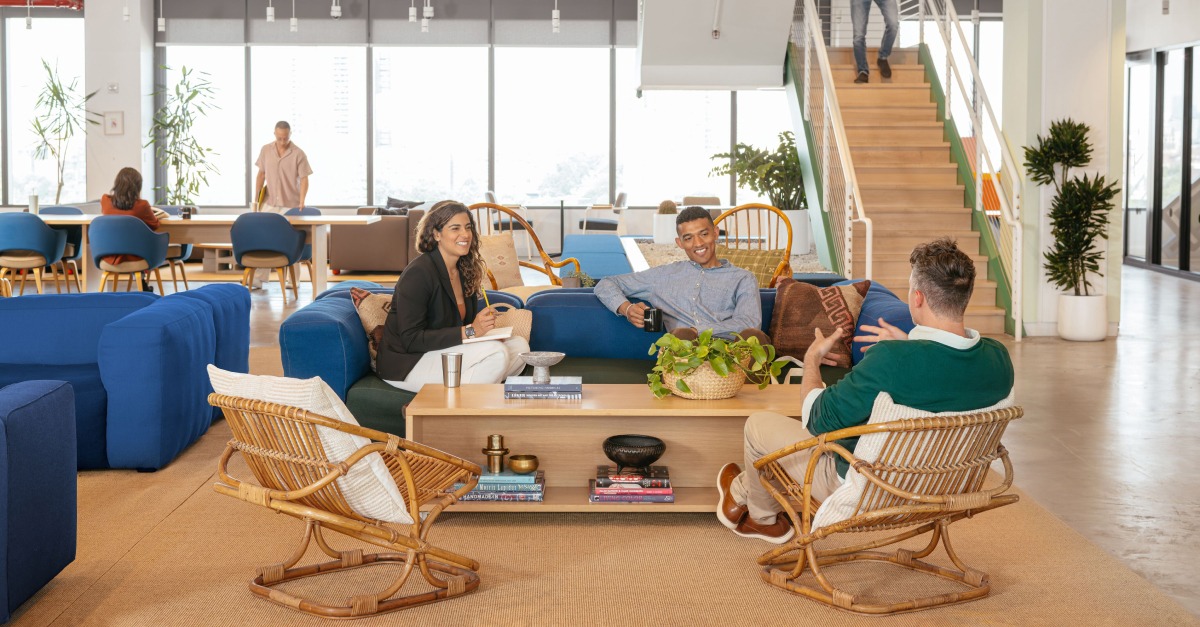
All-inclusive services—from printing and IT to stocked kitchens—free up headspace and bandwidth. In times of economic uncertainty, that kind of built-in operational efficiency is a strategic advantage. When margins are tight and headcount is lean, every hour reclaimed from administrative overhead can be reinvested into client work, growth, and financial resilience.
III. Hybrid & Human-Centric Work
Hybrid work isn’t just for the big guys. Even small teams are adopting blended models, and for good reason. In a recent study, Stanford’s Professor Nicholas Bloom found that hybrid work models increase employee satisfaction and reduce quit rates by 33%. Flexibility is key for employee engagement; the office is no longer just a desk.
When employees go into the office, they seek collaboration, culture, and connection. In turn, shared workspaces give you access to community, structure, and professional amenities without full-time overhead.
“We design with people in mind—spaces that energize, inspire, and foster real connection, whether you’re a team of 2 or 20,” – Ebbie Wisecarver, Chief Design and Product Officer at WeWork.
IV. Professionalism Without the Price Tag
Whether you’re meeting a client or hosting a team offsite, first impressions matter. Creating a professional yet welcoming environment used to require enterprise-level budgets that small businesses simply don’t have. The good news is, that’s not the case anymore. Partners such as WeWork offer spaces with the polish of premium offices—think modern design, staffed front desks, and fully-equipped meeting rooms—without the traditional costs. In 2025, as small businesses face tighter margins and increased scrutiny of their spending, we’re seeing a clear trend toward cost-effective spaces that don’t compromise on quality or brand perception.
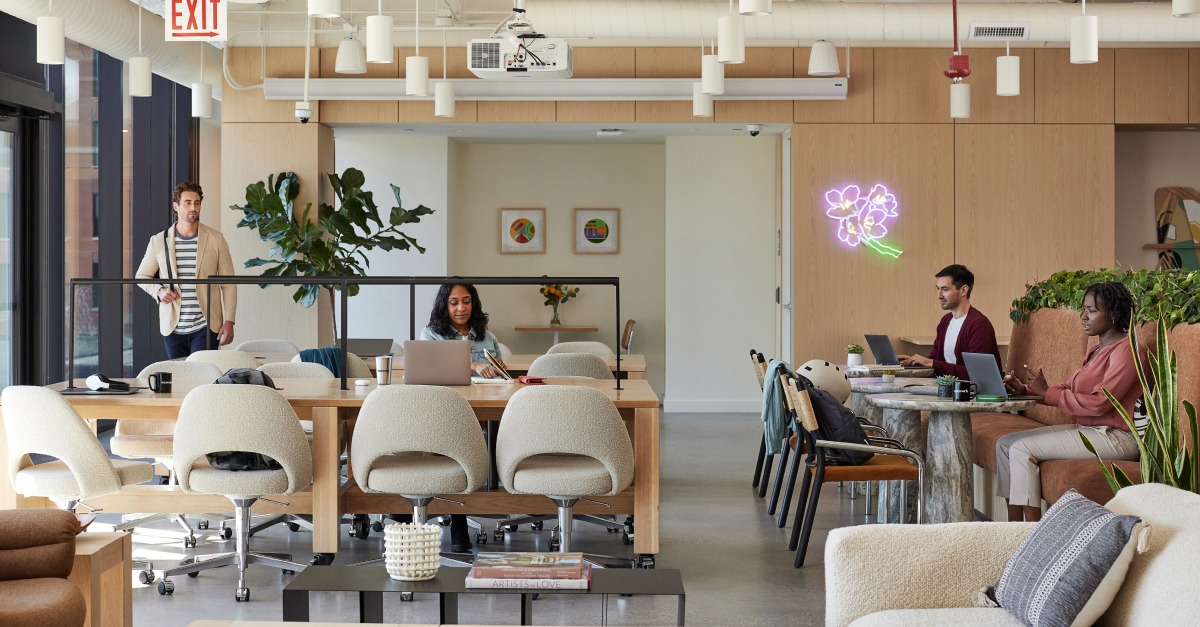
“One of the biggest challenges small businesses face is the high cost and complexity of securing and operating premium office space. On top of that, the administrative burden is often disproportionate and difficult for smaller teams to manage. At WeWork, we handle it all—from leasing the space to managing daily operations—so companies can stay focused on growing their business.” – Luke Armstrong, Regional VP of UKI, EMEA, and APAC at WeWork. Renting a flexible workspace is a strategic investment, elevating your brand and building client trust from day one.
V. Growth-Ready Infrastructure
Your workspace should grow with you, not hold you back.
For small businesses and growing teams, flexibility isn’t a luxury–it’s a necessity. That is the norm in 2025. When you’re hiring your first few employees or expanding into an entirely new region, you want to be able to add seats, shift locations, or open up shop in a different city. With traditional office leases, that kind of agility usually comes at a steep cost. Flexible spaces, however, allow you to scale comfortably and efficiently.
Take, for example, Robin AI, a WeWork member who started with a six-desk private office in London in 2020. As their team grew and client demand accelerated, they quickly expanded—first taking over an entire floor for their headquarters, then tapping into WeWork’s global network of turnkey offices. Today, the company maintains flexible workspaces in New York, Singapore, Australia, and Northern Ireland. There was no need for lengthy lease negotiations or complicated build-outs. Instead, they tapped into a ready-made infrastructure with consistent amenities, seamless onboarding, and a unified support team that scaled with them.

“We’ve seen 2-person startups grow into 20-person teams right down the hall—it’s one of the best parts of what we do. We’re not just giving people a place to sit—we’re creating a platform for growth.” – Claudio Hidalgo, Regional VP of LATAM at WeWork.
This kind of built-in adaptability removes one of the biggest barriers to scaling: the fear of outgrowing your space too soon or locking into something that doesn’t fit long-term. With WeWork, businesses can scale up or down at their own pace, with the peace of mind that their workspace will keep up. In other words, it’s office space that works with you.
Conclusion
In 2025, choosing your workspace is as important a business decision as any. And for small teams navigating an uncertain economy, the proper setup is even more important—it can hold you back, or it can offer clarity, control, and a launchpad for growth.
The direction is clear: flexibility, simplicity, community, professionalism, and scalability are no longer nice-to-haves. They’re must-haves for businesses that want to thrive in the years ahead.
Now’s the time to take a fresh look at where you work. Is your current space supporting your goals? Or is it holding you back?
Contact us at WeWork and see how our flexible workspaces are built for what’s next.


