


You’re settling into your desk at WeWork on a Tuesday morning, coffee in hand, when a small Dachshund trots past your door. You smile. The person two desks over reaches down to scratch its ears. Somewhere behind you, someone asks “whose dog is that?” in a tone that’s genuinely delighted.
This is the good scenario of dogs at work. It happens every day in WeWork buildings around the world. But it happens because there are rules in place, because the dog’s owner showed up prepared, and because everyone on that floor understands the handful of unwritten courtesies that make pet-friendly coworking function properly in practice.
If you’re thinking about bringing your dog to a WeWork location, or you already do and want to make sure you’re doing it well, here’s the practical side of the arrangement.
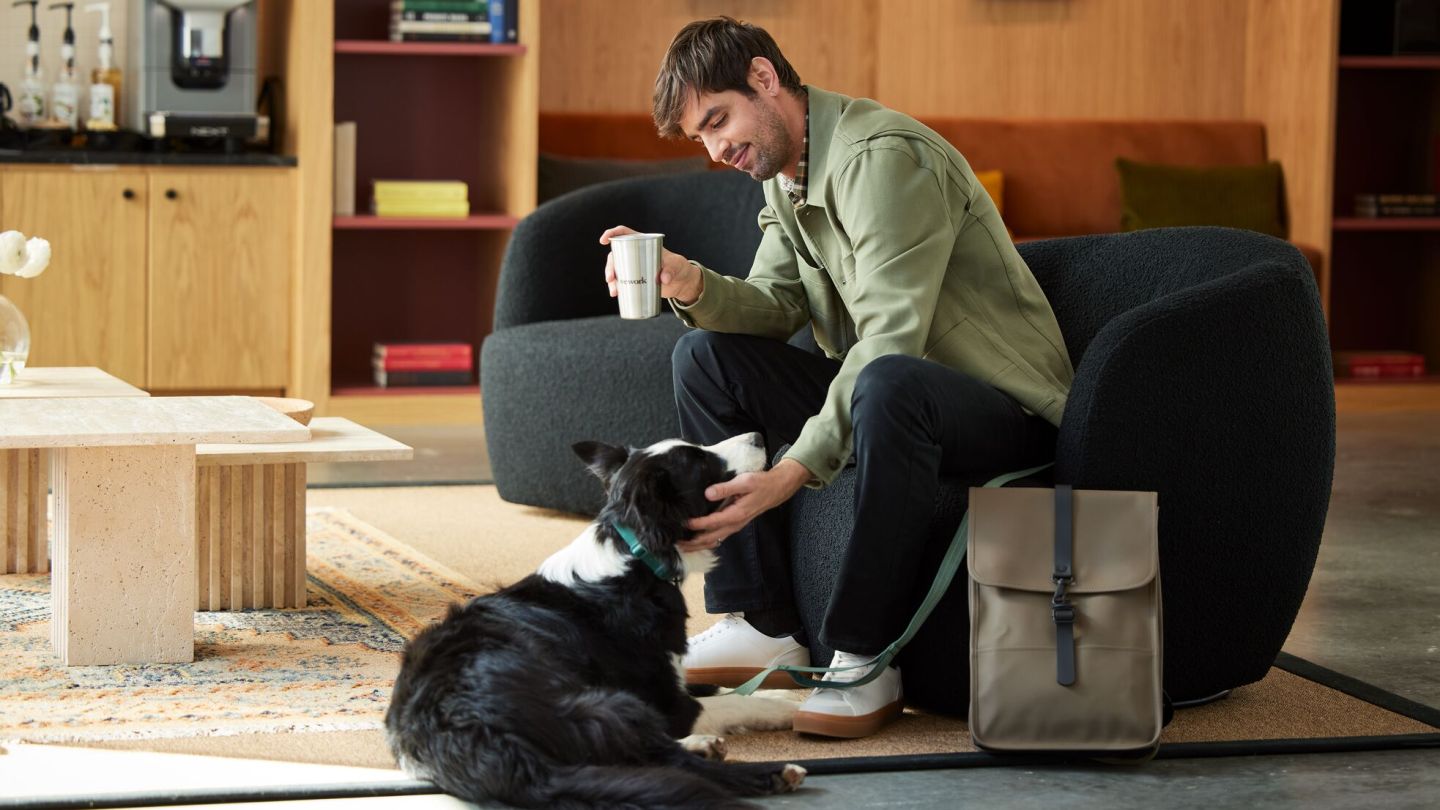
First, check your specific location
WeWork’s dog-friendly policy is one of those amenities members consistently mention as a reason they chose the space. But not every building participates. The policy varies by location depending on local regulations, building management agreements, and the layout of the space itself.
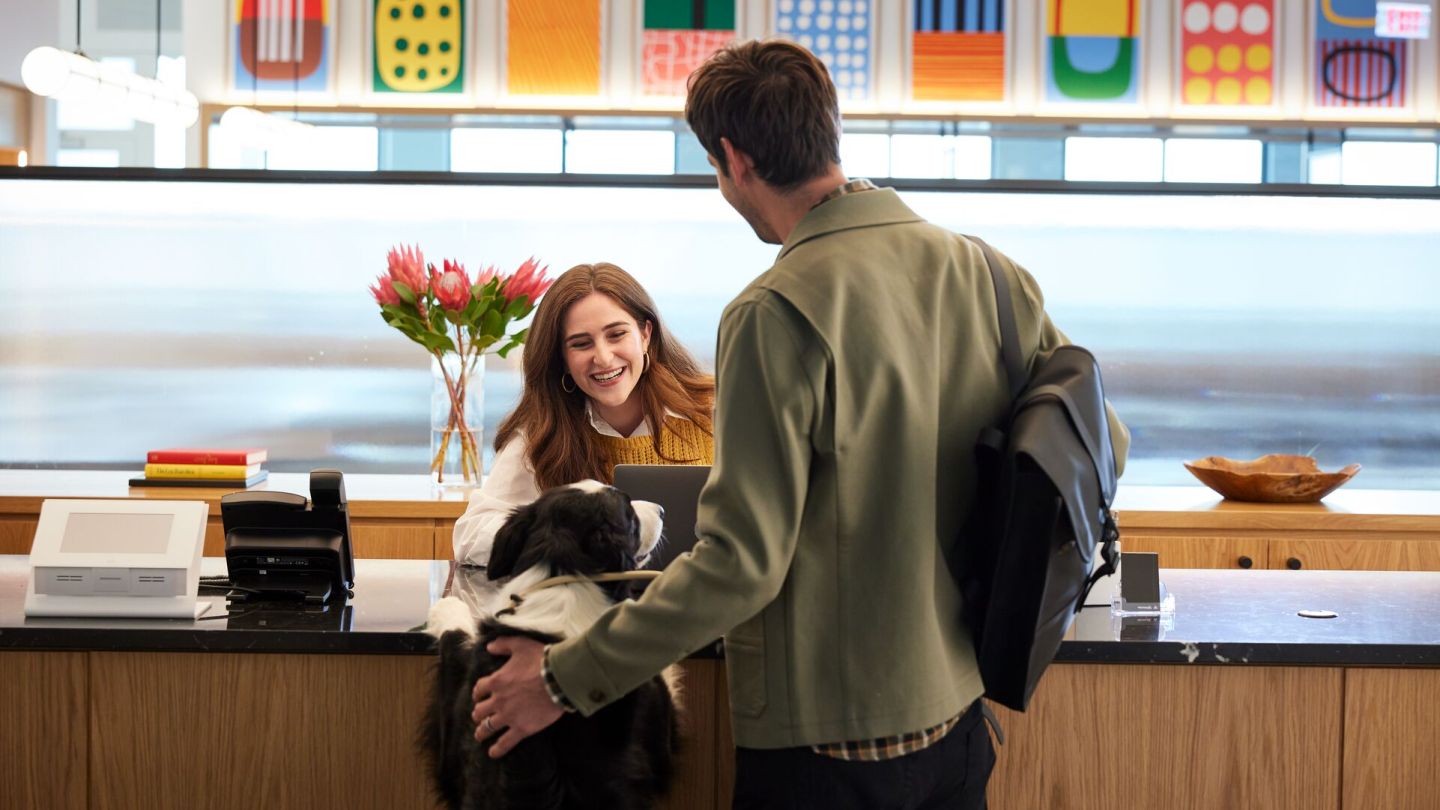
Before your dog’s first day, check with your building’s community team. They’ll tell you whether dogs are welcome at that specific location, whether there are designated floors or zones where they are allowed, and what documentation you’ll need. Most dog-friendly WeWork locations require proof of up-to-date vaccinations at minimum. Some ask for additional records.
This five-minute conversation saves you from an awkward first morning. It also connects you with the people who can answer the smaller logistical questions, like where the nearest outdoor relief area is or which elevator is best for avoiding the lunch rush with a leashed dog in tow.
What to pack on day one
You’ve seen other members show up with their dogs and make it look effortless. That’s because they packed the right bag. The essentials are simple, but skipping any of them turns a smooth day into a stressful one.
Here’s what to bring:
- A bed, mat, or portable crate so your dog has a defined spot at your desk
- A collapsible water bowl and a bottle of water
- Waste bags, even if the building has stations outside
- A leash you can loop around your chair or desk leg for moments when you need your hands free
- A few quiet chew toys or a stuffed Kong for the inevitable afternoon stretch when you’re deep in focused work and your dog needs something to do
- Enzymatic cleaning spray and a small roll of paper towels, because muddy paws, drool, and the occasional accident happen to even the most well-behaved dogs
That last one is the item people tend to forget. Cleaning up immediately, before anyone else notices, is the difference between being a considerate pet owner and being the reason someone files a complaint. The goal is for your dog’s presence to feel like a pleasant background detail, not something your neighbors have to manage.
The etiquette that makes it work
Rules are posted on the wall. Etiquette is the stuff nobody tells you but everyone notices.
- Leash in every shared space. The hallways, the common lounges, the micro-kitchen, the elevator. Your dog may be perfectly friendly, but the person stepping in with a laptop bag and a full cup of coffee didn’t opt into an off-leash greeting.
- Manage barking before anyone has to ask. A short burst when someone new walks by is understandable. Sustained barking that carries through glass partitions and into phone booths changes the atmosphere of an entire floor. If your dog is having a restless day, take a walk, find a quieter corner, or call it an early afternoon.
- Keep food contained. No open bowls of kibble near your desk in a shared area. The smell carries, and it draws attention from every other dog on the floor. Feed before you arrive or in a contained, out-of-the-way spot.
- Ask before approaching someone else’s dog. It’s a small gesture that respects boundaries and protects the animal.
Reading the room and responding before anyone has to say something is what makes pet-friendly coworking sustainable.
Being thoughtful about people who didn’t choose this
A dog-friendly workspace is a shared space, which means it can include people who are allergic, people who are nervous around dogs, and people who simply concentrate better without animals nearby. Their experience matters as much as yours.
In most dog-friendly WeWork buildings, the best course of action is to check with the community team; ask them which zones are pet-friendly and which are not. Respect those boundaries completely. If your dog wanders, bring them back. If a colleague mentions discomfort, take it seriously and without defensiveness. The fact that you love your dog doesn’t obligate anyone else to.
The members who make a dog-friendly office work long-term are the ones who pay attention to the people around them, not just the ones who smile at the dog, but the ones who don’t. A quick “is it OK that he’s here?” when you sit down near someone new costs nothing and communicates everything.
A few things worth knowing about service animals
You’ll occasionally encounter service animals in WeWork buildings, and they operate under entirely different rules than office pets. Service animals are generally protected under federal law, including the ADA, and are typically permitted in all areas regardless of a building’s pet policy. Your community team can walk you through how this applies at your location. They are individually trained to perform specific tasks for a person with a disability.
Emotional support animals are a separate category and don’t carry the same federal workplace protections. If you’re unsure about the distinction, your community team can help clarify. The key is to remember that these dogs are working. Never approach, distract, or pet a service animal without explicit permission from its handler.
What to do when things go sideways
Your dog has an accident in the hallway. Another dog on the floor growls at yours. Your normally calm pet decides today is the day to bark at every person who passes your desk.
These moments happen. How you respond defines whether pet-friendly coworking continues to work at your location. Clean up immediately and thoroughly. Remove your dog from any tense interaction. If the day isn’t going well, take your dog home without waiting for someone to ask you to. Report any incident, even a minor one, to the community team so there’s a record and any patterns can be addressed early.
Making it a good day for everyone
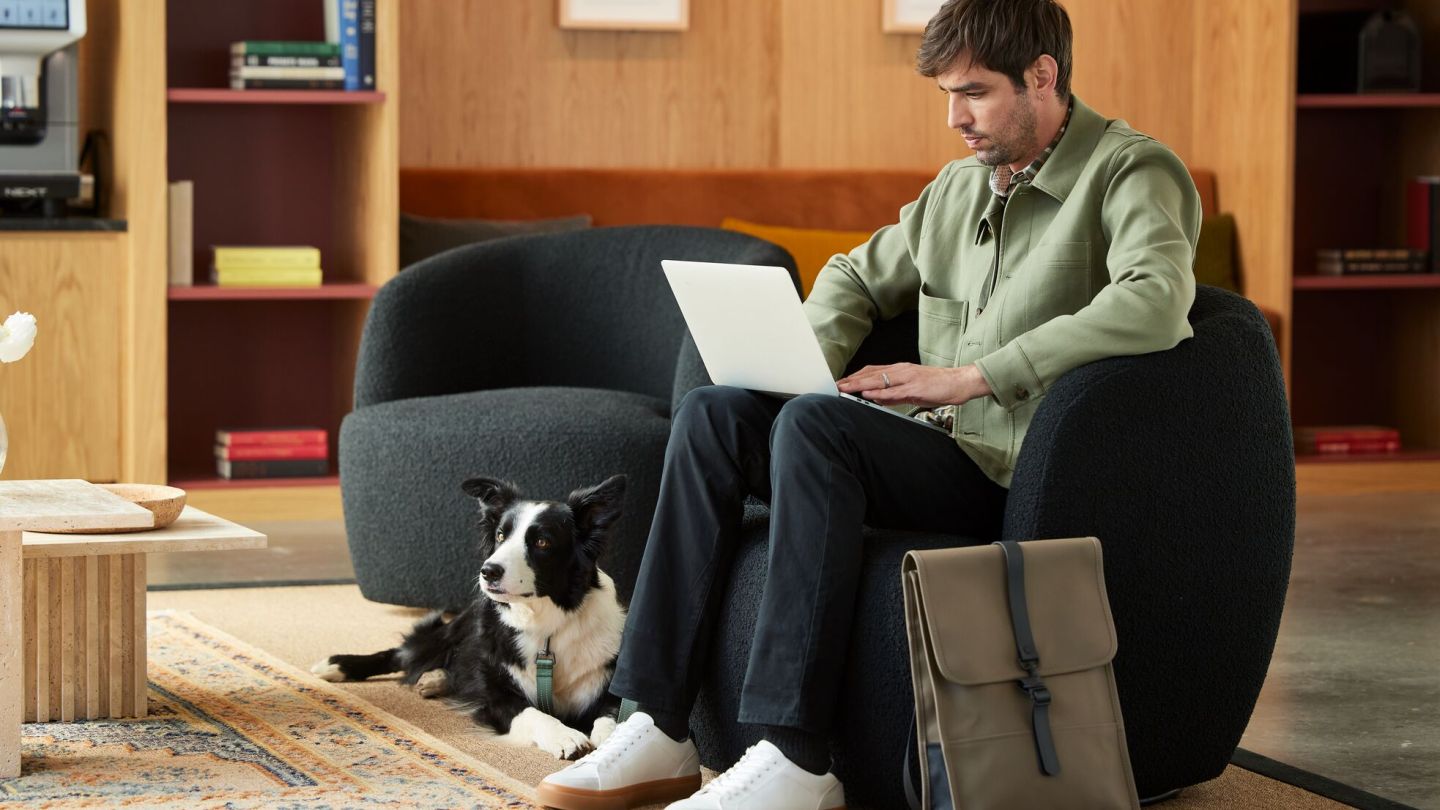
The best days with a dog at WeWork are the ones where everything runs quietly. Your dog naps under your desk while you work. A colleague stops by to say hello on their coffee break. You take a walk at lunch. The person in the phone booth next to you doesn’t even know there’s a dog ten feet away.
That seamlessness doesn’t happen by accident. It happens because you checked the rules, packed the right bag, and stayed aware of the people around you. If you’re considering bringing your dog to your WeWork, start with a conversation with your community team. They’ll walk you through the specifics of your building, and you can take it from there.