


One of the highlights was a conversation with WeWork member Jon Steinberg, Partner at Mountside Ventures, one of Europe’s leading accelerators and advisory firms. Keep reading for Jon’s advice for founders and investors in the tech space.
A safe and steady partner for turbulent times
You and your team have created something special. What opportunities did you initially see within the investment landscape that inspired the founding of Mountside Ventures?
JON: We saw too many great founders wasting huge amounts of time navigating an opaque and fragmented funding landscape. Mountside was set up to directly address this problem by helping management teams run efficient fundraising processes, with expert professional advice, and ultimately find the right capital partners on the best possible terms, all whilst avoiding the common pitfalls.
The goal has always been to be a trusted advisor and extension of the management team when going through the difficult process of raising funding, not just a connector.
We are now becoming the first port of call for founders looking to raise external funding, and have advised on over £210m of institutional funding across 50 deals in just the last 4 years.
Understanding the future of fundraising
As we’ve witnessed at Tech Week, things are changing fast, on both sides of the equation. How do you see the future of fundraising evolving?
JON: We will see more specialised funds rather than broad generalists. Cross border collaboration will keep rising, making Europe feel like one ecosystem. There is also a strong push towards impact, climate and deeptech which is slowly combining most of the ‘hot’ markets like AI, Defence, and Cyber.
As things continue to expand, are there any paths forward that founders are missing, or not taking advantage of?
JON: Founders should look beyond traditional VC. Angel investors (especially when SEIS / EIS allocation remains), family offices, venture debt (when £2m+ in revenue) and even revenue-based financing can all play a role. The strongest companies are those that build flexible funding strategies and explore all the relevant funding options suitable for their growth stage.
Are there any common misconceptions you see founders have about the fundraising process?
JON: Many think if they have built a great product and team, it is a quick, transactional process. In reality, it takes months and is built on trust and long-term relationships. Pitching well is only the start, as running a competitive and efficient diligence process with multiple interested parties for an institutional process matters far more when it comes to obtaining the best possible terms and an efficient closing process.
Advice for founders that are ready to talk
Part of what seems to set Mountside apart is the intense focus you put on preparedness. What’s your advice to founders who are starting to prepare for their own investor conversations?
JON: Be crystal clear on your story, metrics, and vision. Anticipate the hardest questions and practice answering them. Build an ‘Investor FAQ’ with succinct well written responses to all potential ‘yellow flags’ that the investor comments on, which will build your credibility and show that you are completely on the ball with all of the inner workings of your business and the competitive landscape. Investors back people who show they can manage both ambition and risk with confidence.
What’s the best piece that you’ve gotten as a founder? Is there something that really stuck with you?
JON: Focus on the few things that really shift the needle. Time is the scarcest resource, so say no to distractions. It is better to do a handful of things very well than many things averagely.
And if you could pass just one piece of advice on to other founders, what would it be?
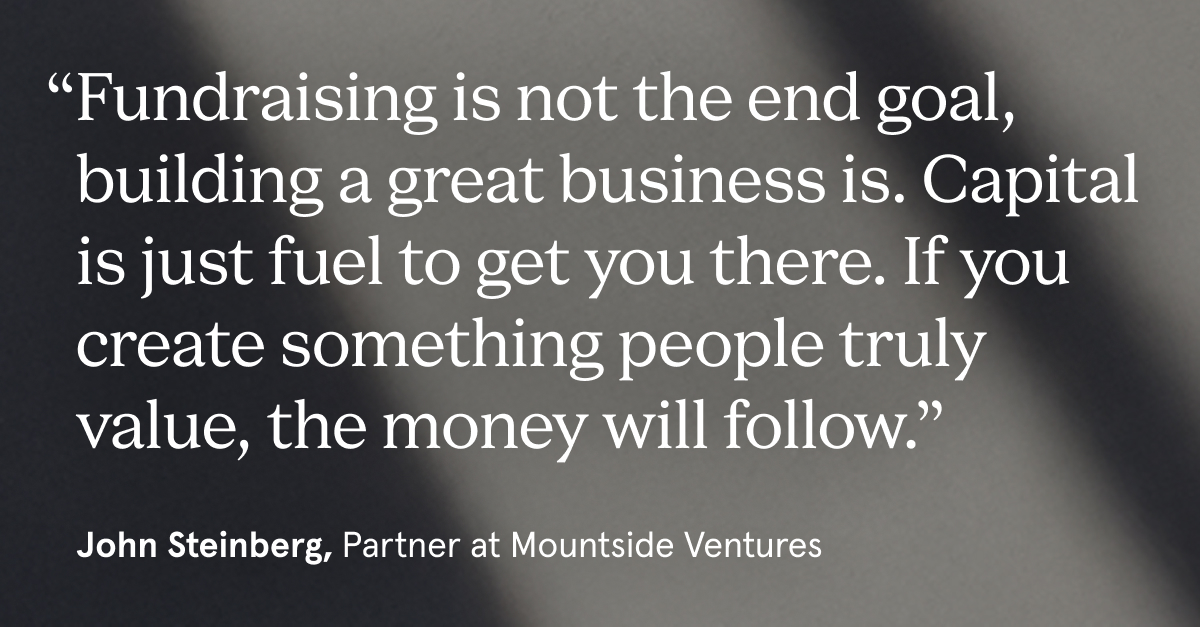
JON: Fundraising is not the end goal, building a great business is. Capital is just fuel to get you there. If you create something people truly value, the money will follow.
Putting a premium on space and community
For many, the highlight of Tech Week is the opportunity to connect with other entrepreneurs and founders in the space. As we all know, being a founder at the startup stage can be all-consuming, and at times, feel lonely. What role do you think community plays in the startup process? How can we build it?
JON: Starting up can be isolating, and community helps overcome that. We’ve seen this first-hand at our founder alumni and investor events. Shared spaces give founders the chance to learn from each other and exchange resources. Serendipity and support networks often make the difference in momentum. Having people around you going through similar problems and milestones is very motivating
Speaking of shared spaces–Mountside has made their home at WeWork! What’s it been like, having a flexible real estate solution?
JON: It gave us the flexibility we needed in the early days (WeWork was actually our first office when we were first starting out) and now that we are a bigger team, it provides the perfect solution. We host all our founder programme days there—with very good free coffee— without taking on the burden of a long lease, which is difficult for a company at our stage. That freedom allowed us to scale the team at our own pace. Our team is also based all around London, and having WeWork locations close to their houses means that they can benefit from having a local office (Paddington and Tower Bridge are especially popular with the team) during days when we are not all sitting together in Waterloo.
Do you feel like there are benefits unique to WeWork suit startups particularly well?
JON: Yes, the flexibility of space and global reach are invaluable as we host and run so many events across Europe. Short term commitments mean founders can adapt as their business grows. Plus, the built in network of other entrepreneurs creates natural dealflow and collaboration.
If you’re interested in learning more about finding a flexible office that fits your business, explore all our office solutions here.